Reading A Graduated Cylinder Worksheet
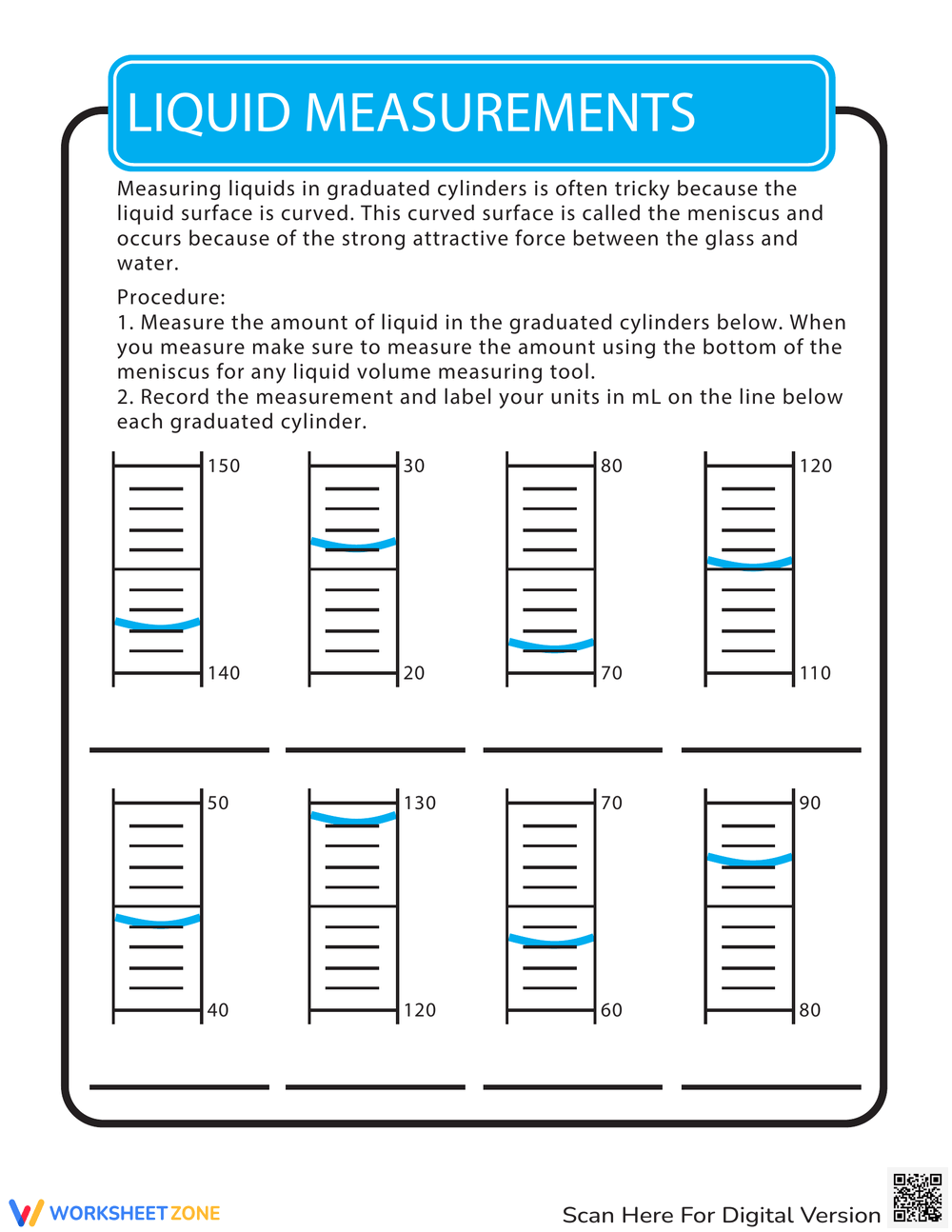
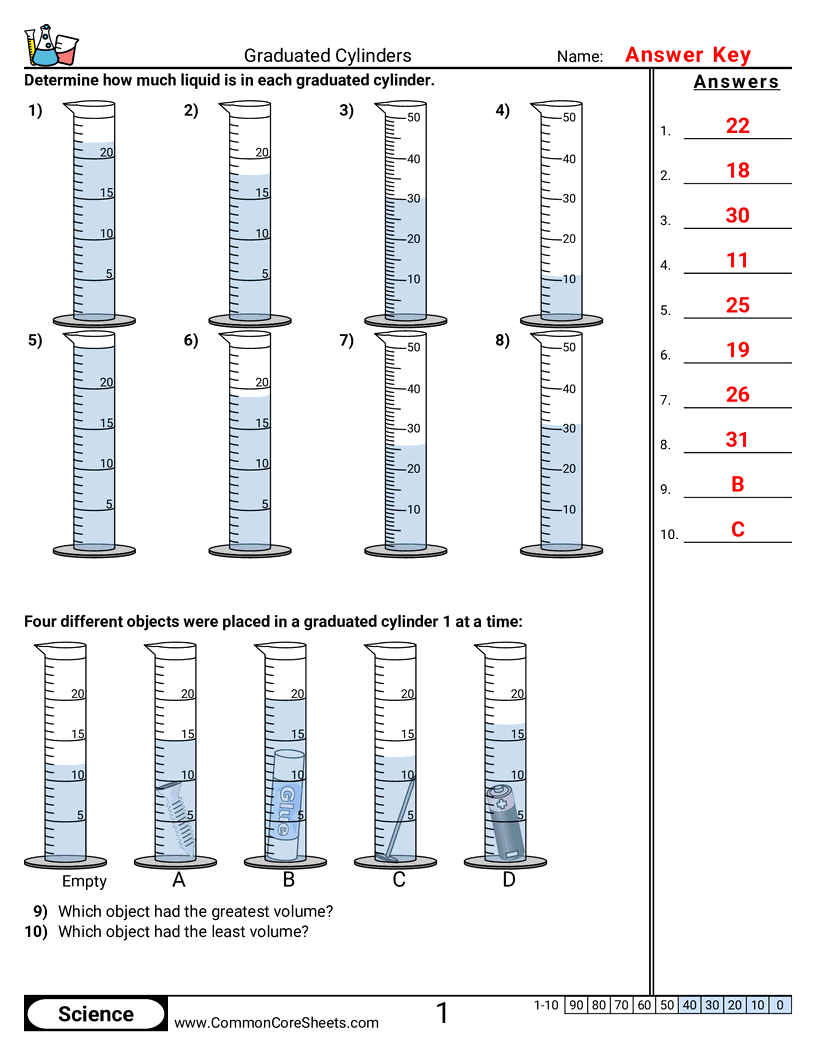
Understanding how to read a graduated cylinder is a foundational skill in science education, especially for students in upper elementary and middle school. The Reading A Graduated Cylinder Worksheet is a fantastic tool to help children grasp this essential concept. This resource can be printed and used in various settings, making it a versatile addition to your educational toolkit.
What is a Graduated Cylinder?
A graduated cylinder is a common piece of laboratory equipment used to measure the volume of liquids accurately. Unlike beakers, which provide approximate measurements, graduated cylinders offer a more precise readout thanks to their marked graduations. Typically made from glass or plastic, these cylinders come in various sizes and are essential for experiments in chemistry and biology.
When using a graduated cylinder, it’s important for students to understand how to read the meniscus—the curve of the liquid’s surface. This skill is crucial for obtaining accurate measurements, which is where the Reading A Graduated Cylinder Worksheet comes into play.
Layout and Sections of the Worksheet
The Reading A Graduated Cylinder Worksheet is thoughtfully designed to facilitate learning. It usually includes:
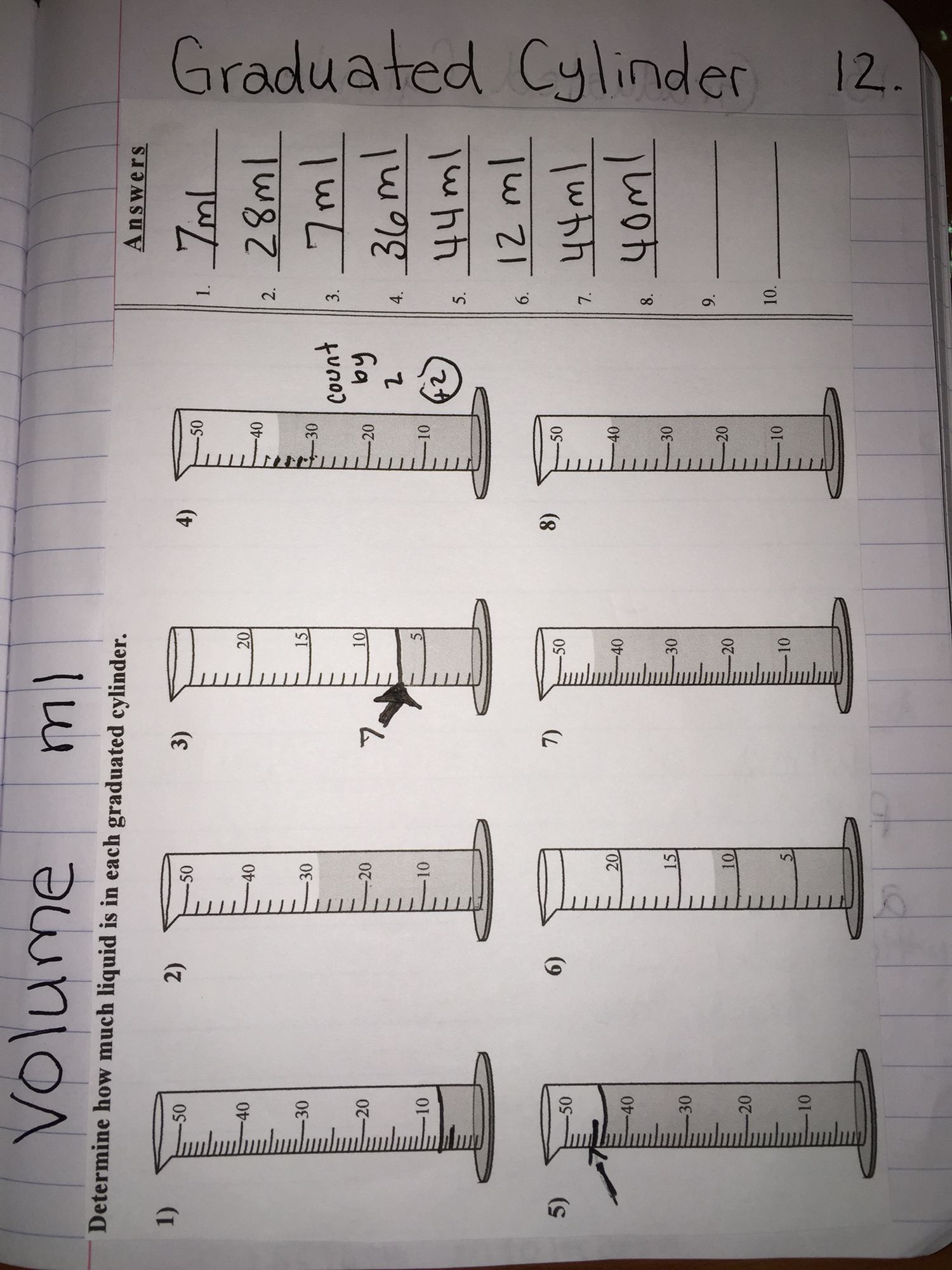
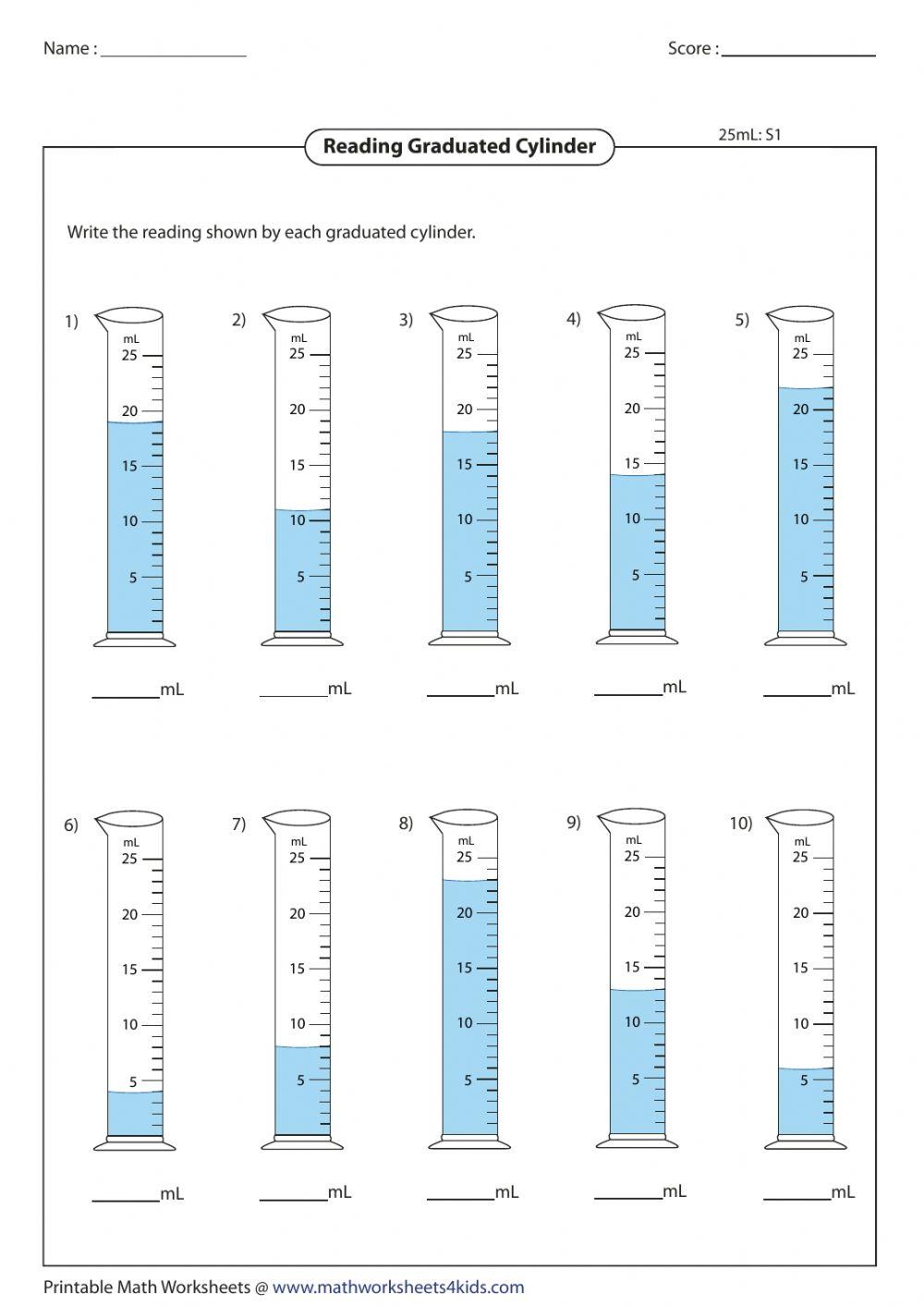
- Visual Examples: Images of graduated cylinders filled with different liquids at various levels.
- Measurement Questions: Prompts that ask students to identify the volume of liquid in the cylinder based on the meniscus reading.
- Practice Problems: A section for students to solve similar problems to reinforce their understanding.
The layout is clean and straightforward, making it easy for students to focus on the task at hand. Each section is designed to build on the previous one, allowing for a gradual increase in difficulty. This approach is particularly helpful for students who may struggle with the concept initially.
Age and Grade Level Suitability
The Reading A Graduated Cylinder Worksheet is typically suitable for students in grades 4 through 8. At this age, children are often introduced to basic laboratory techniques in science classes. The worksheet can be adapted for different learning levels, making it a great resource for both advanced learners and those who need a bit more support.
In a homeschool setting, you can use this worksheet to supplement science lessons, helping your child gain confidence in their measurement skills. For classroom use, this resource can be integrated into a larger unit on measurement or scientific methods, providing a hands-on activity that reinforces theoretical knowledge.
Spacing Repeated Practice Across the Week
One of the most effective ways to reinforce learning is through spaced repetition. Instead of handing out the Reading A Graduated Cylinder Worksheet and expecting students to master the material in one sitting, consider breaking it down over the course of a week.
You might start with a brief introduction to graduated cylinders on one day, followed by the worksheet on another. Then, spend the next few days having students practice reading measurements in different contexts—perhaps by measuring liquids in the kitchen or at a local science museum. This approach not only helps solidify the skill but also makes learning more engaging and less overwhelming for students.
Practical Uses of the Worksheet
The Reading A Graduated Cylinder Worksheet can be utilized in several practical ways:
- Hands-On Experiments: Pair the worksheet with a simple lab activity where students measure liquids using graduated cylinders. This real-world application reinforces their learning and helps them see the relevance of what they’re studying.
- Group Work: Have students work in pairs or small groups to complete the worksheet. Collaborative learning can enhance understanding, as students explain concepts to one another and share strategies for reading the cylinder correctly.
- Assessment Tool: Teachers can use the completed worksheets as an assessment tool to gauge student understanding. This feedback can inform future lesson planning and identify areas where students may need additional support.
- Home Learning: For parents, this worksheet can be a fun way to engage with your child’s education. You can turn it into a game by challenging them to measure various liquids around the house, logging their results on the worksheet.
Tips for Printing and Using the Worksheet
When it comes to printing the Reading A Graduated Cylinder Worksheet, consider these practical tips:
- Paper Type: Use cardstock for durability, especially if the worksheet will be used multiple times or in a classroom setting. If you plan to laminate it for reuse, cardstock holds up better than standard printer paper.
- Printer Settings: Ensure your printer is set to the appropriate quality settings to avoid any distortion in the images or text. A standard A4 or letter size works best for most home printers.
- Accessibility: Ensure that the worksheet is easily accessible to students. If you’re using it in a classroom, consider providing a digital copy that students can refer to on their devices.
The Reading A Graduated Cylinder Worksheet serves as an excellent resource for developing essential measurement skills in a fun and engaging way. If you are teaching at home or in a classroom, this worksheet will make learning about graduated cylinders enjoyable and effective.
Reading A Graduated Cylinder Worksheet Gallery