Free Solving Inequalities Learning Pages For Kindergarten
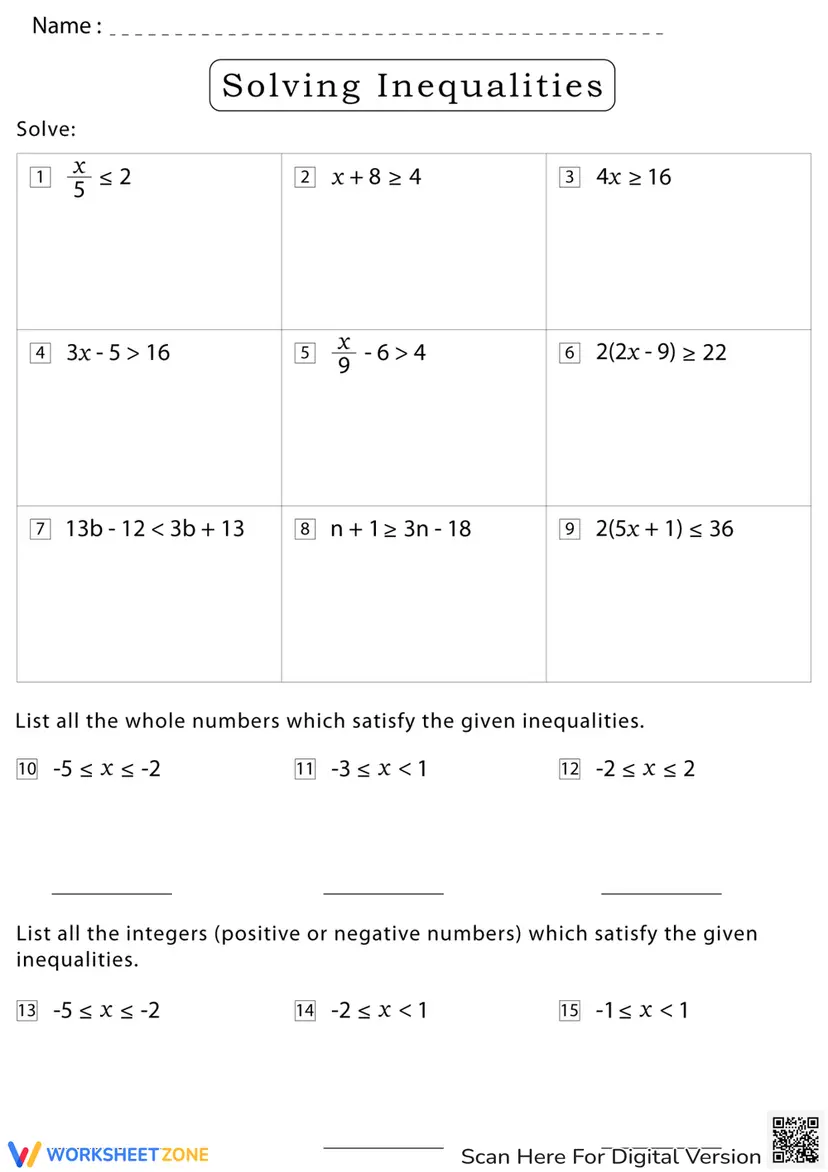
Understanding how to solve inequalities is a crucial math skill that can set the foundation for advanced mathematical concepts. For kindergarten students, this learning can start with simple activities that introduce the basic ideas of inequalities in a fun and engaging way. Free solving inequalities learning pages for kindergarten provide an excellent resource for teachers and parents looking to enrich their students’ understanding of math concepts through practical, hands-on activities.
Introducing Inequalities to Young Learners
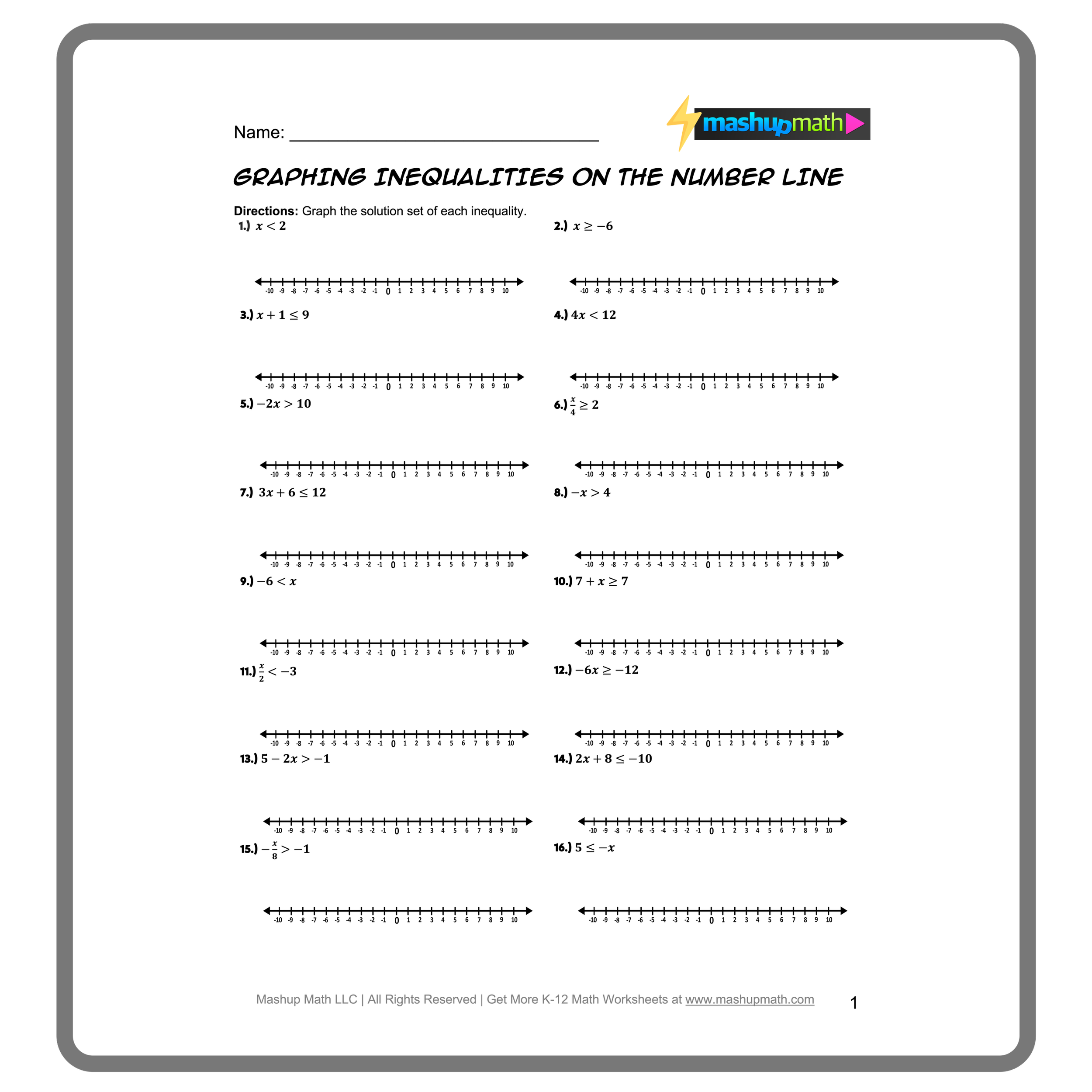
Before diving into worksheets, it’s essential to understand what inequalities are. Inequalities express the relationship between two values when one is greater than, less than, or equal to the other. For kindergarteners, introducing these concepts should be done through relatable examples. For instance, you might say, “You have three apples, and I have five. Who has more?” This kind of interaction sets the stage for using printable resources effectively.
When using free solving inequalities learning pages for kindergarten, keep in mind that these resources are designed to make learning fun. They often incorporate colorful graphics and engaging activities that capture young learners’ attention. The goal is to help them understand the concept of more than and less than in a way that’s intuitive and relatable.
Using Printable Worksheets Effectively
Once you’ve introduced the concept of inequalities, it’s time to utilize the free learning pages. Here’s how to make the most of these resources:
- Print and Prepare: Download the worksheets in a format that suits your printing needs. Most of these resources are available as PDFs, which are ideal for printing without formatting issues. You can print them on standard A4 or letter-sized paper, depending on your printer settings.
- Create a Learning Environment: Set up a quiet, distraction-free area for your child to work. This could be a designated corner of a classroom or a cozy spot at home. Ensure that they have all necessary supplies on hand, such as crayons, pencils, or markers.
- Interactive Learning: As your child works through the worksheets, engage with them. Ask questions about the problems they are solving. For example, if a worksheet shows three stars and five hearts, ask, “Which is more? How do you know?” This reinforces their understanding and encourages critical thinking.
- Encourage Repetition: Mastery comes with practice. Don’t hesitate to print multiple copies of the same worksheet or use different variations of the same concept. This approach helps solidify their understanding of inequalities.
Assessing Progress in Understanding
As your students or children work through the free solving inequalities learning pages for kindergarten, it’s crucial to assess their understanding regularly. Here are some practical ways to check their progress:
- Observation: Watch how they approach the problems. Are they able to identify which number is larger or smaller? Do they understand the symbols used for inequalities (>, <, =) when they see them?
- Discussion: After they complete a worksheet, have a discussion about what they learned. Ask them to explain their thought process for solving the problems. This not only reinforces their learning but also helps you identify any areas where they may need additional support.
- Follow-Up Activities: Create follow-up activities based on their performance. If a child struggles with understanding “greater than,” consider using physical objects, such as blocks or toys, to visually demonstrate the concept.
Engaging Activities Beyond Worksheets
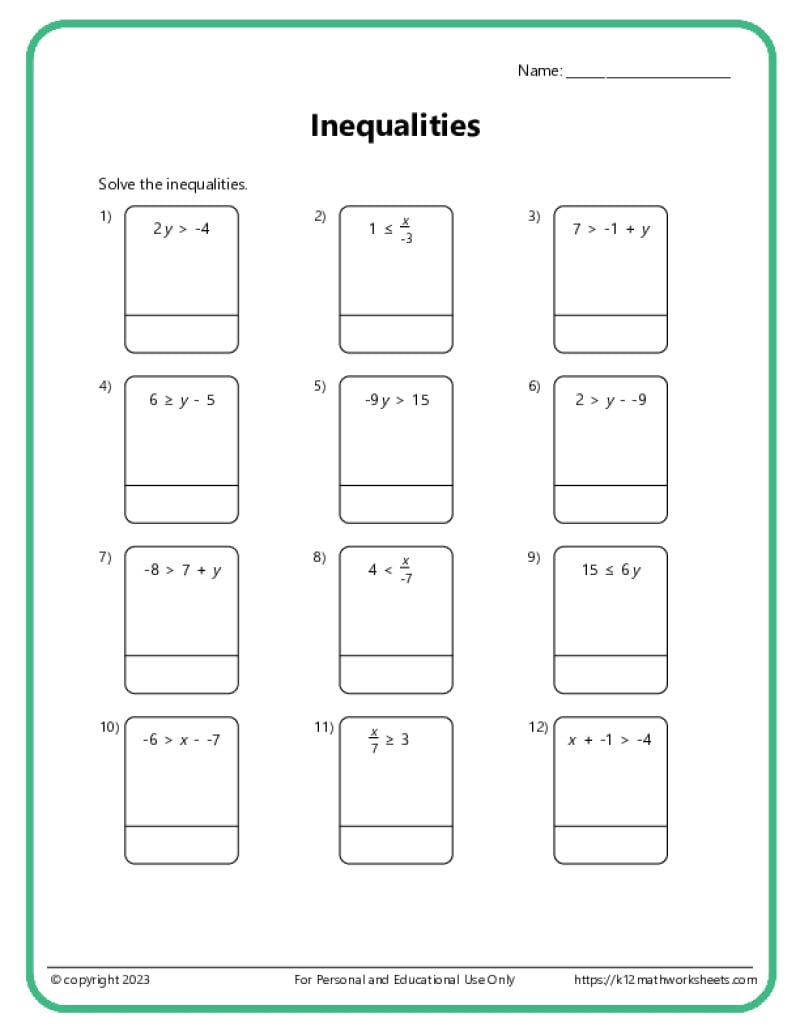
While worksheets are a great tool, incorporating a variety of activities can keep learning dynamic. Here are a few engaging ideas:
- Inequality Games: Play games that involve comparing quantities. For example, you could use a set of flashcards with numbers and have them race to find which card shows a greater or lesser number.
- Story Problems: Create simple story problems involving inequalities. For instance, “If you have four toys and your friend has two, do you have more toys than your friend?” This helps children relate math to real-life scenarios.
- Arts and Crafts: Use art to illustrate inequalities. Have students create a drawing that shows more or less of something, such as drawing five flowers and two leaves, then labeling them with the correct inequality symbols.