Printable Kindergarten Classroom Unit Rate Calculations Activities
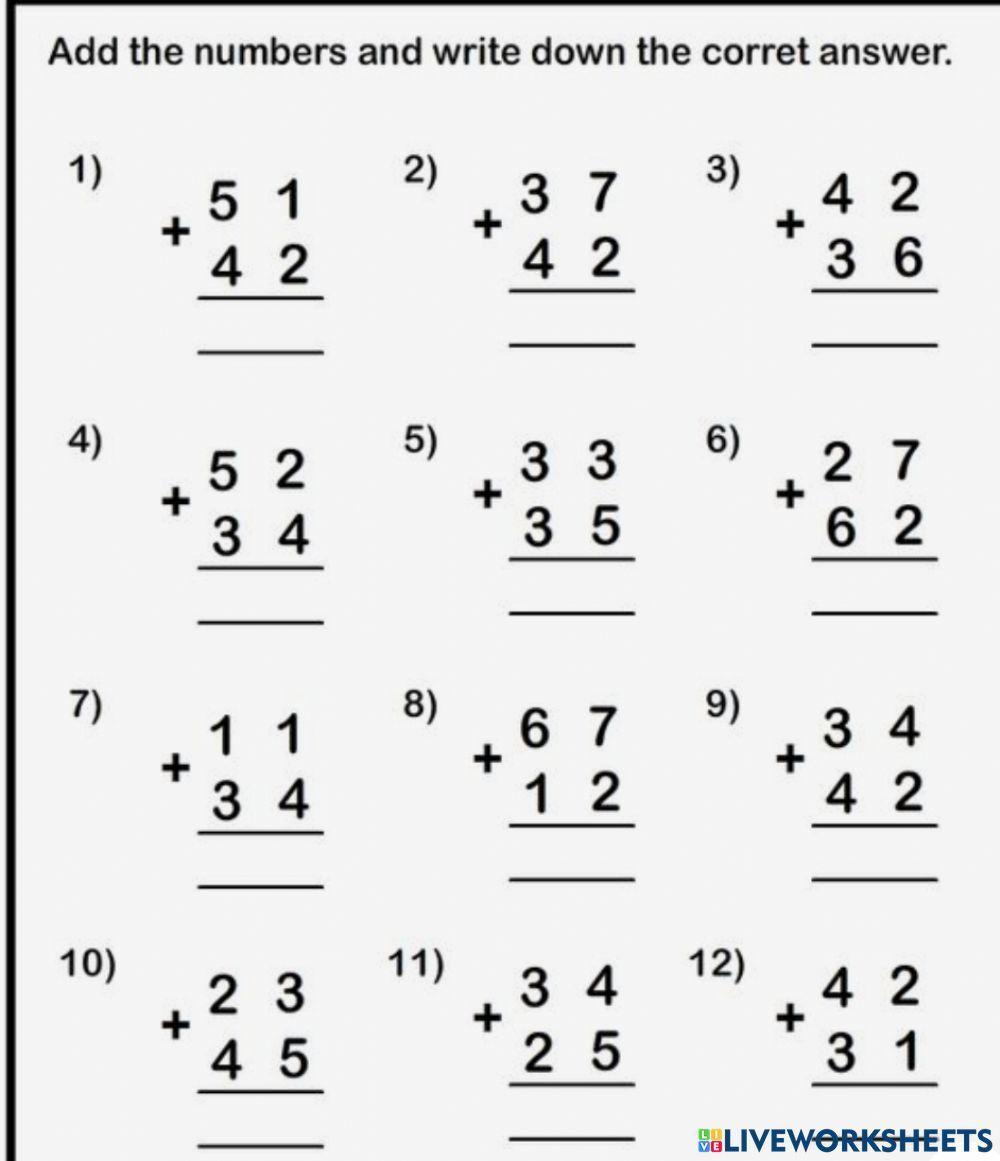
Incorporating unit rate calculations into your kindergarten classroom can seem daunting, but it doesn’t have to be. Printable Kindergarten Classroom Unit Rate Calculations Activities provide an excellent way to make math both fun and educational. These activities are designed to help young learners grasp the concept of unit rates through engaging, hands-on experiences that fit seamlessly into your lesson plans.
Understanding Unit Rates in Kindergarten
Unit rates are a foundational math concept that helps children compare quantities. In kindergarten, children are ready to explore these ideas through real-world applications, like measuring ingredients for a recipe or determining how many items they can buy with a certain amount of money. By using printable activities, you can introduce unit rates in a way that is relatable and easy for them to understand.
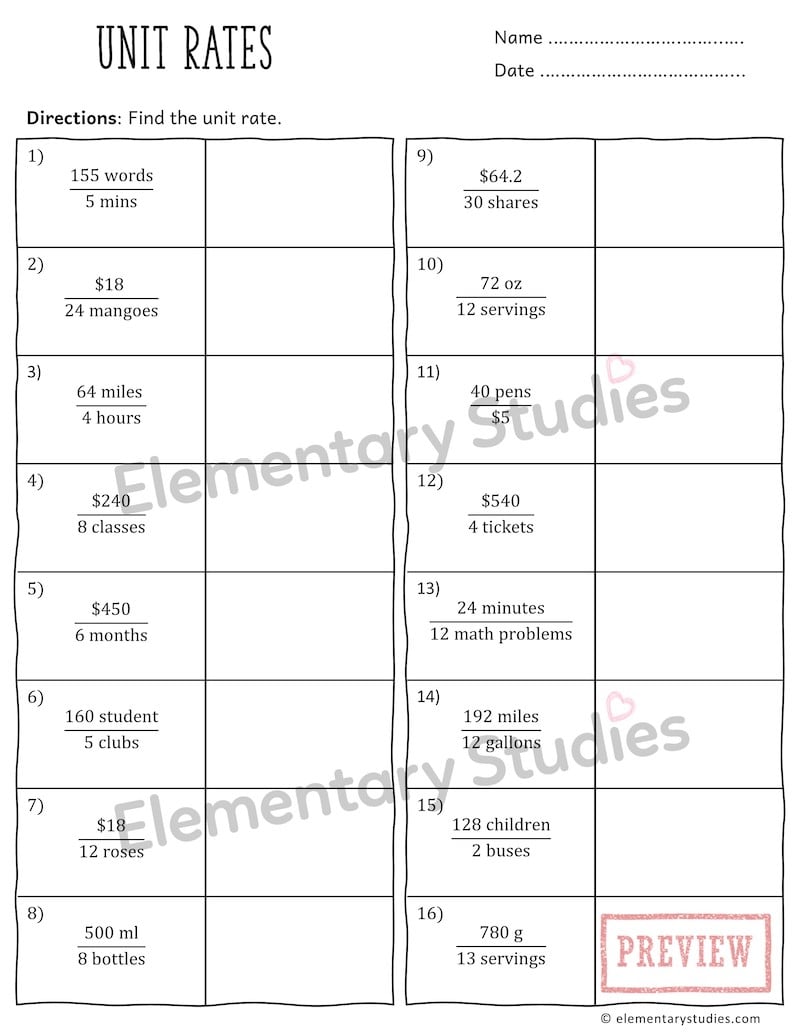
Introducing unit rates can start with simple examples. For instance, you might ask, “If you have 4 apples and 2 friends, how many apples does each friend get?” This question naturally leads into discussions about division and sharing, setting the stage for unit rate calculations. With engaging worksheets, students can visualize these concepts, making the learning process more effective.
Engaging Activities for Learning Unit Rates
When it comes to teaching unit rates, hands-on activities are crucial. Here are some ideas for effective printable activities that can help your students practice calculating unit rates:
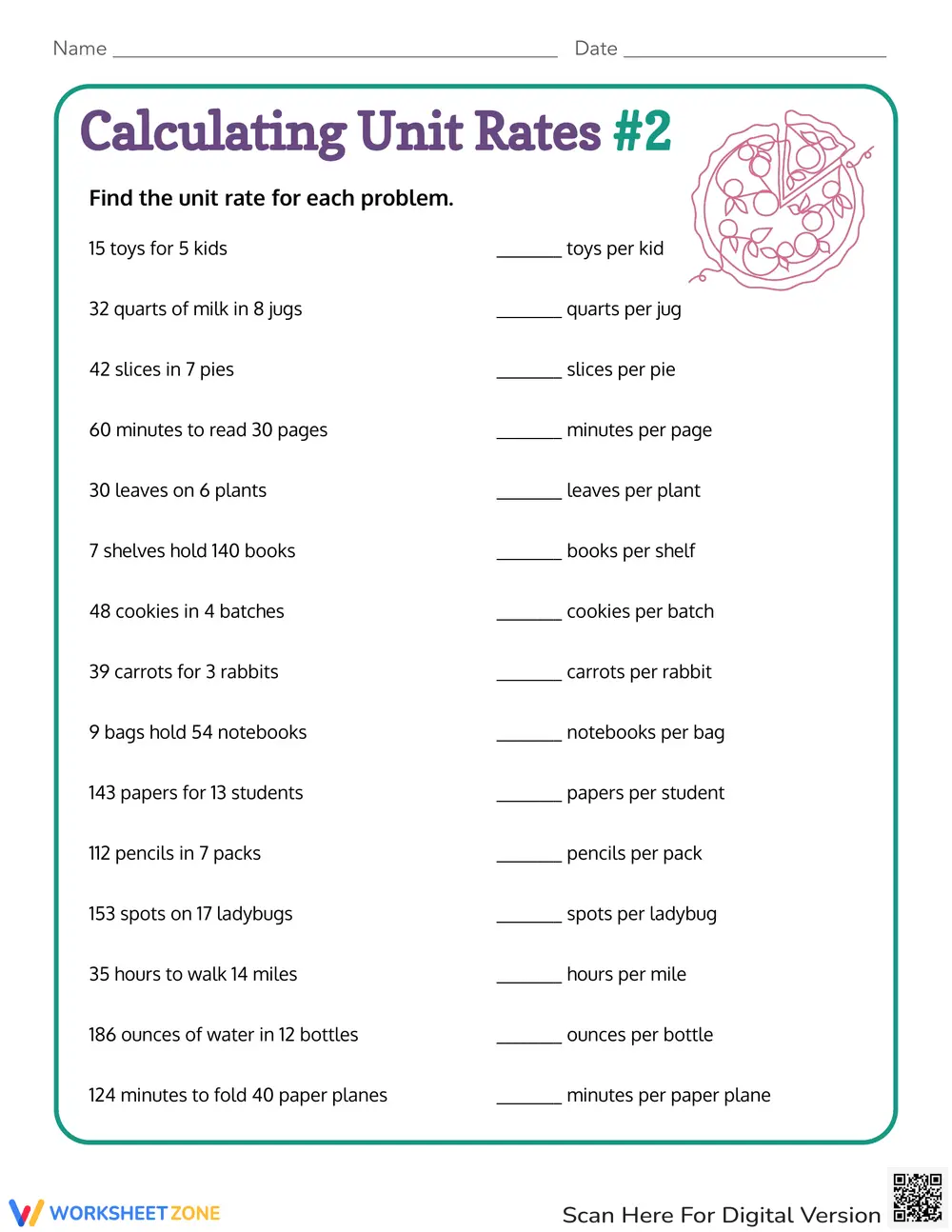
- Fruit Stand Activity: Create a worksheet where students can calculate the price per fruit. For example, if a banana costs $1 for 3 bananas, students can find out how much one banana costs. This not only teaches unit rates but also incorporates money skills.
- Snack Time Calculation: Use snack items like crackers or gummy bears. Provide worksheets where students count how many snacks are in a pack and how many packs they have. Then, they can determine the total number of snacks and calculate how many snacks each student can have if shared equally.
- Shopping Spree: Design a worksheet that simulates a shopping experience. Give students a budget and a list of items with prices. They can calculate how many of each item they can buy, encouraging them to think critically about their choices and the concept of value.
These activities not only make learning about unit rates enjoyable but also relevant to everyday situations, helping students see the value in what they are learning.
Assessing Understanding of Unit Rates
As with any educational activity, assessing understanding is key to mastery. After completing the printable Kindergarten Classroom Unit Rate Calculations Activities, here are a few ways to evaluate your students’ grasp of the concept:
- Observation: Watch students as they work through the activities. Are they able to articulate their thought processes? Are they engaging with the material? This informal assessment can give you immediate feedback on their understanding.
- Group Discussions: After completing an activity, hold a class discussion. Ask students to share their answers and thought processes. This can help you gauge their understanding and clarify any misconceptions.
- Follow-Up Worksheets: Provide additional worksheets that vary in difficulty. For instance, you can start with simple unit rates and gradually increase complexity. This will allow you to see who has mastered the concept and who may need additional support.
Printable Resources for Unit Rate Activities
One of the best things about using printable resources is their accessibility. You can easily find worksheets that align with your curriculum and are tailored for your students’ level. Here are some key features to look for in printable resources:
- Variety of Formats: Look for worksheets that include a mix of visual aids, such as pictures and diagrams, alongside text. This helps cater to different learning styles.
- Clear Instructions: Ensure that the worksheets come with easy-to-follow instructions. Young learners need clarity to help them navigate new concepts without frustration.
- Answer Keys: Having an answer key can be a huge time-saver, allowing you to quickly check students’ work and provide feedback.
You can find these resources online, often available as free downloads or for a small fee. Just make sure they are aligned with your teaching goals and the needs of your students.
Practical Tips for Implementing Unit Rate Activities
When integrating printable Kindergarten Classroom Unit Rate Calculations Activities into your lessons, consider these practical tips:
- Plan Ahead: Prepare materials in advance. Have all printable resources ready for your lesson to avoid any last-minute scrambling.
- Incorporate Technology: If possible, use digital versions of worksheets for interactive learning experiences. Many children enjoy using tablets or computers, and this can enhance engagement.
- Follow Up with Real-Life Applications: After the activities, encourage students to look for examples of unit rates in their daily lives. This could be as simple as comparing prices at the grocery store or discussing how many toys they can buy with their allowance.
- Encourage Collaboration: Allow students to work in pairs or small groups. This encourages discussion and helps them learn from one another.
By implementing these activities and tips, you’ll create a dynamic learning environment that fosters a strong understanding of unit rates among your kindergarten students. This foundational skill will benefit them not only in math but also in everyday problem-solving situations.