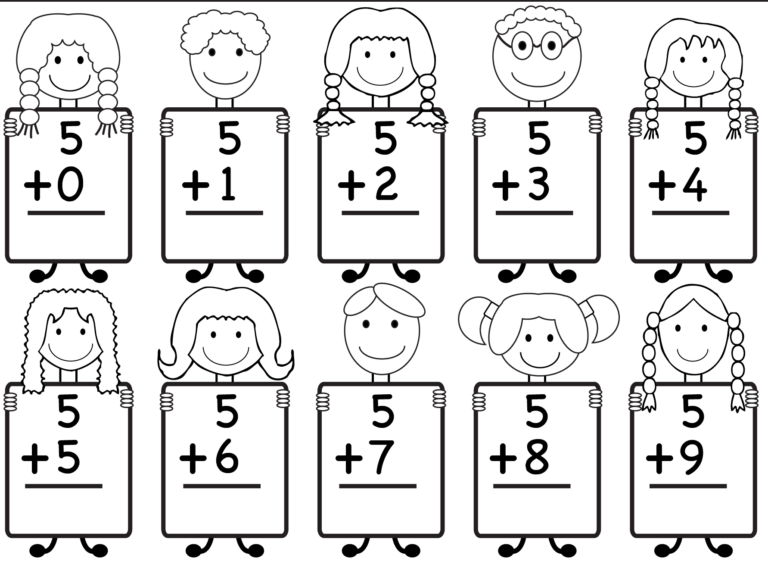
Kindergarten Skill Worksheets Covering Unit Rate Calculations
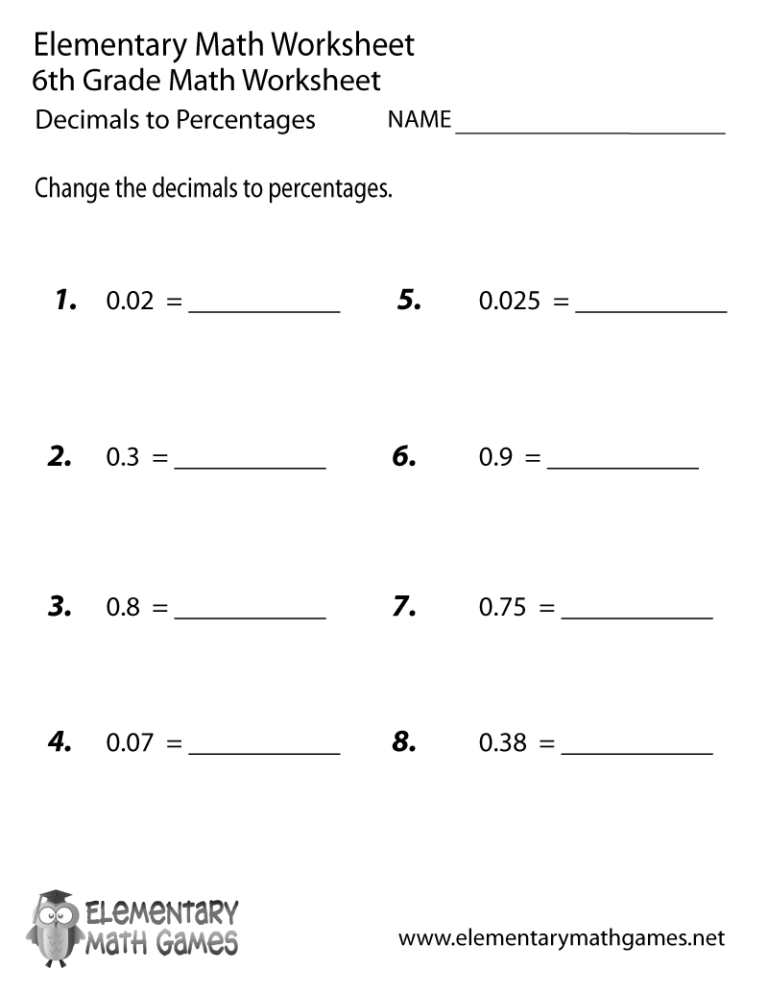
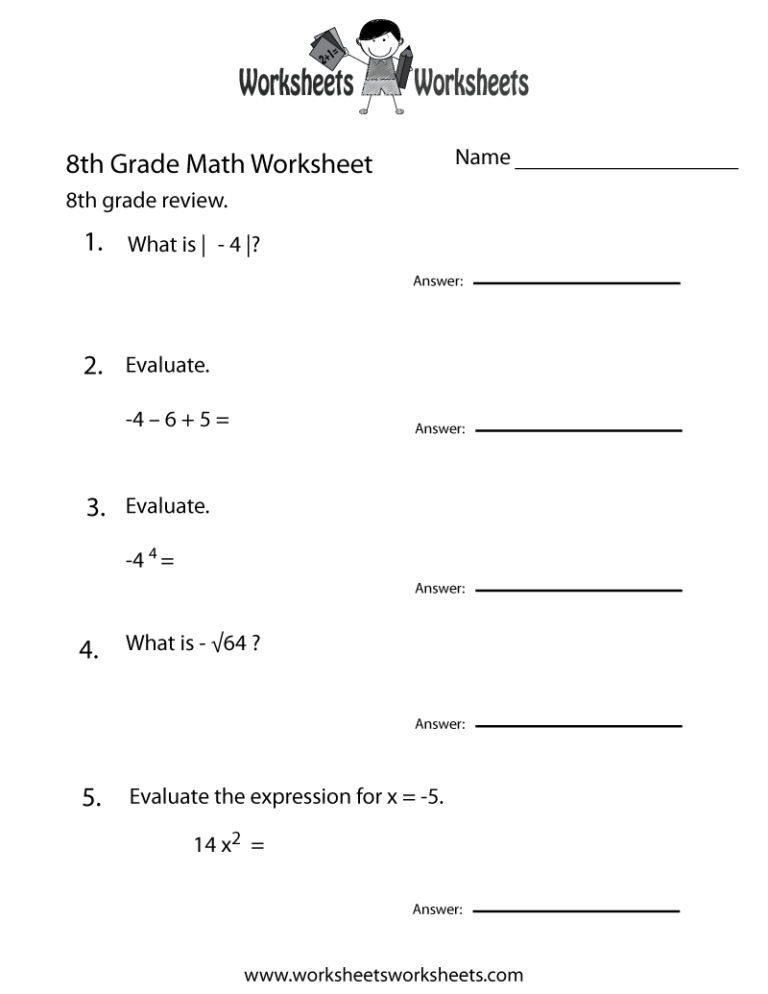
Understanding unit rates can be a challenge for kindergarten students. However, using dedicated worksheets can simplify this concept and make learning enjoyable. Kindergarten Skill Worksheets Covering Unit Rate Calculations provide a structured approach to help young learners grasp the basics of unit rates. These worksheets offer practical exercises that can be easily integrated into lessons, allowing teachers and parents to track progress effectively.
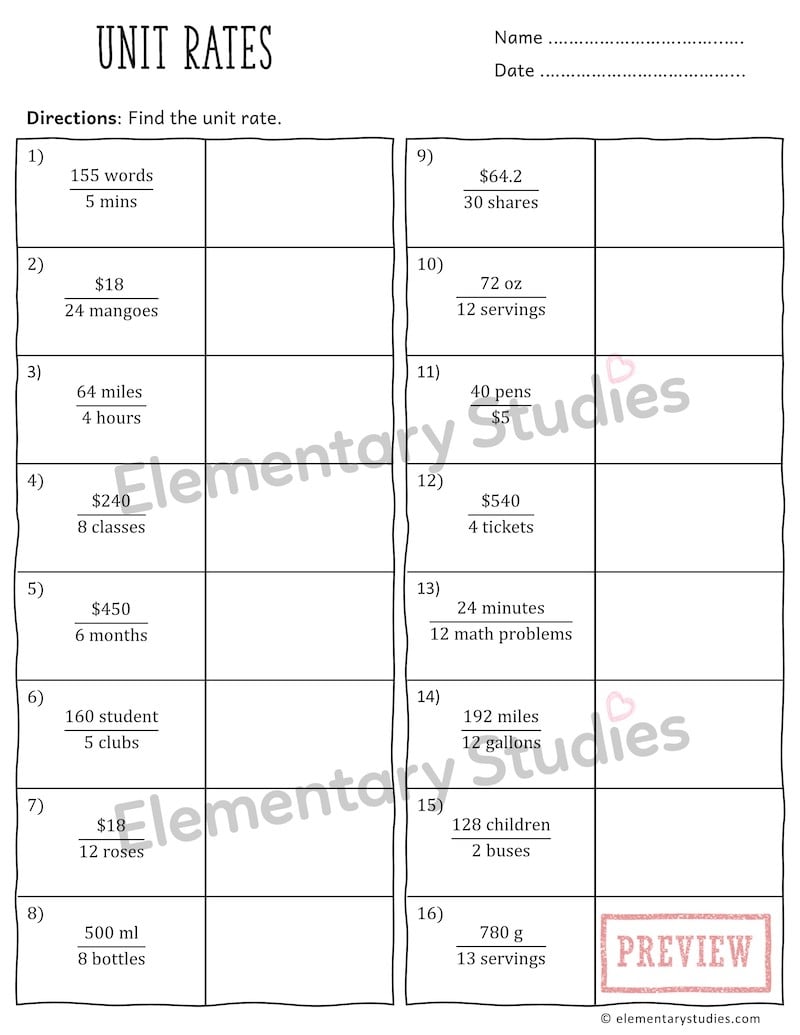
Why Use Worksheets for Unit Rate Calculations?
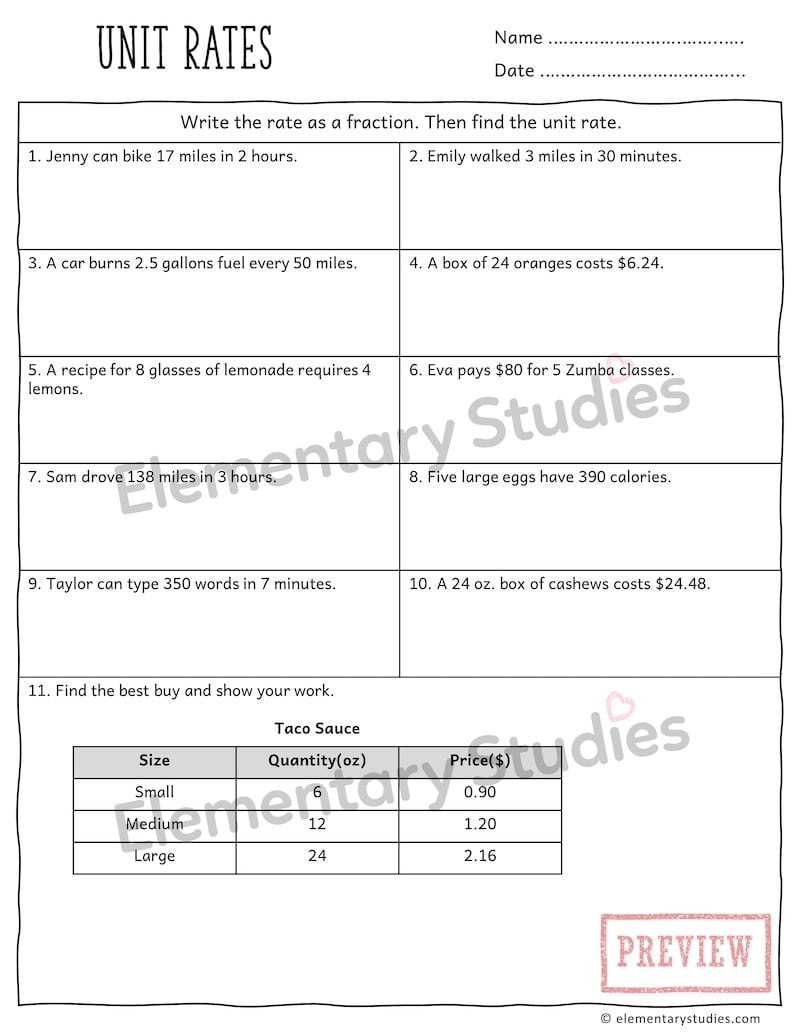
Worksheets serve as an essential tool for reinforcing concepts taught in class. They provide a hands-on approach that encourages children to practice what they’ve learned. The use of Kindergarten Skill Worksheets Covering Unit Rate Calculations can help students:
- Develop critical thinking skills
- Enhance problem-solving abilities
- Foster independence in learning
When children engage with these worksheets, they practice calculating unit rates in a way that feels approachable. This is crucial for their mathematical foundation.
Choosing the Right Worksheets
Selecting the appropriate worksheets is key to effective learning. Look for resources that are specifically designed for kindergarten students. Here are some important features to consider:
- Age Appropriateness: Ensure the worksheets are tailored for kindergarten-level understanding.
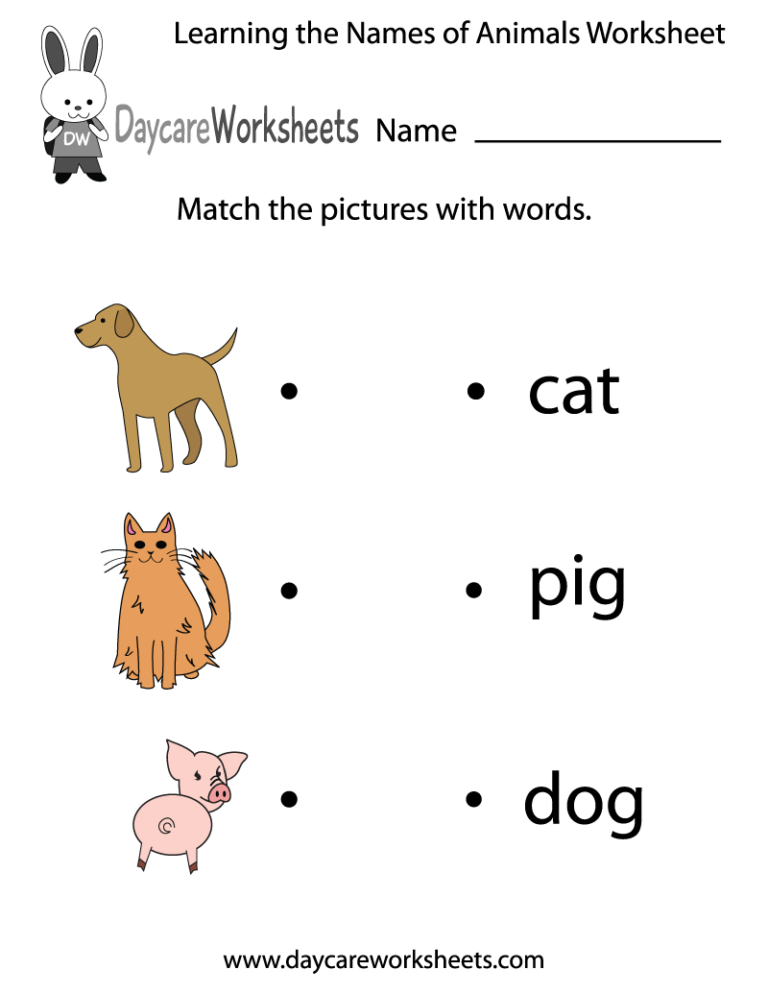
- Visual Appeal: Worksheets with colorful images and engaging designs can capture students’ attention.
- Clear Instructions: Simple, straightforward language will help children understand what is expected of them.
Many printable resources are available online. Look for those that allow for immediate download and printing. This way, you can be prepared for your lesson without any delays.
Setting Up for Success
Once you have chosen the right worksheets, it’s time to set up your classroom or learning environment. Here’s how to create an effective workspace:
- Print the Worksheets: Use standard 8.5 x 11-inch paper for easy handling. If you’re considering laminating them for durability, cardstock is a great option.
- Organize Materials: Keep pencils, erasers, and any other necessary supplies within reach to minimize distractions.
- Create a Comfortable Space: Ensure students have enough room to work without feeling cramped. A well-lit area can enhance focus.
By preparing the environment, students can look at learning without unnecessary interruptions.
How to Use the Worksheets Effectively
Engaging with the worksheets is where the real learning happens. Here are some tips for making the most out of Kindergarten Skill Worksheets Covering Unit Rate Calculations:
- Introduce the Concept: Start with a brief explanation of unit rates. Use simple examples, like comparing quantities of fruit. For instance, “If you have 4 apples and 2 oranges, how many apples do you have for every orange?”
- Model the Process: Walk through a couple of examples together. Show how to calculate the unit rate step-by-step. This modeling helps students feel more confident as they begin their own work.
- Encourage Group Work: Allow students to work in pairs or small groups. Collaborative learning can foster discussion and enhance understanding.
- Monitor Progress: As students work, circulate around the room to provide support. Offer encouragement and feedback to keep them motivated.
These strategies can help solidify the students’ understanding of unit rates, making the learning experience more fruitful.
Tracking Progress
Monitoring students’ progress is essential for understanding their grasp of unit rate calculations. Here are some effective methods:
- Check Completed Worksheets: Review the worksheets after students have finished. Look for patterns in their answers to identify areas where they excel or struggle.
- Use Additional Resources: If students find the worksheets challenging, consider supplementary materials such as flashcards or interactive games that reinforce the same concepts.
- Conduct Quick Assessments: A brief quiz or verbal questioning can help gauge understanding. Ask students to explain their thought process for calculating unit rates.
Regularly assessing progress not only helps you tailor your teaching but also boosts students’ confidence as they see their own improvement.
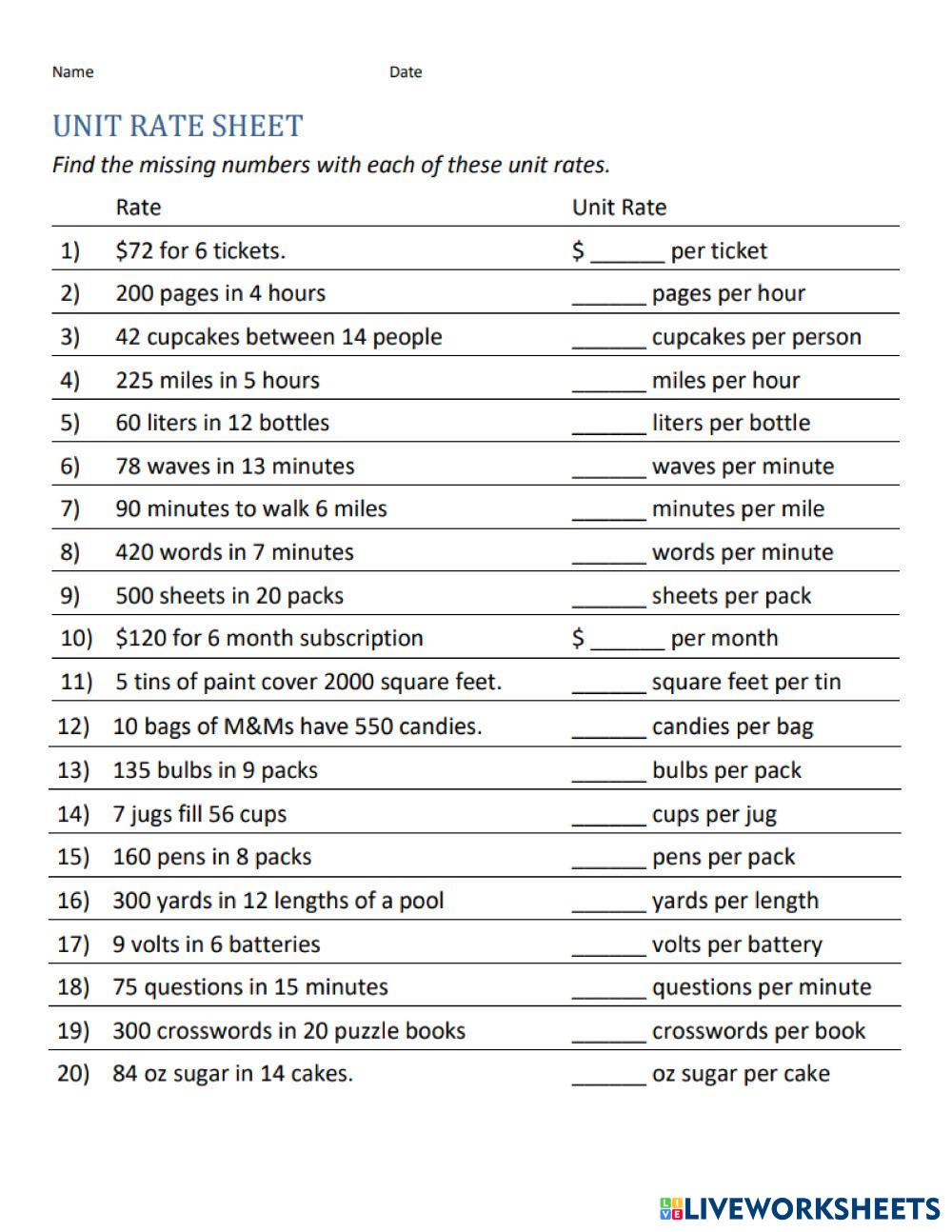
Making Learning Fun
Incorporating fun activities alongside worksheets can enhance engagement. Here are some ideas:
- Coloring Pages: Create coloring activities that involve unit rates, such as coloring a set number of fruits in relation to others.
- Games: Use games that involve counting objects and comparing quantities. For example, a shopping game where students “buy” items and calculate the unit price can be both educational and enjoyable.
- Story Problems: Integrate storytelling with math. Create simple stories that involve unit rates, and let students act them out or draw illustrations.
These activities can make the learning process feel less rigid and more enjoyable for young learners.
Encouraging kindergarten students to grasp unit rates through well-structured worksheets and engaging activities can lay the groundwork for their future mathematical success. Be sure to frequently assess their understanding and adapt your teaching strategies as needed. One immediate action you can take is to download and print a set of Kindergarten Skill Worksheets Covering Unit Rate Calculations today, so you can start reinforcing these vital skills in your classroom or home.