Water Pollution Reading Comprehension Worksheet
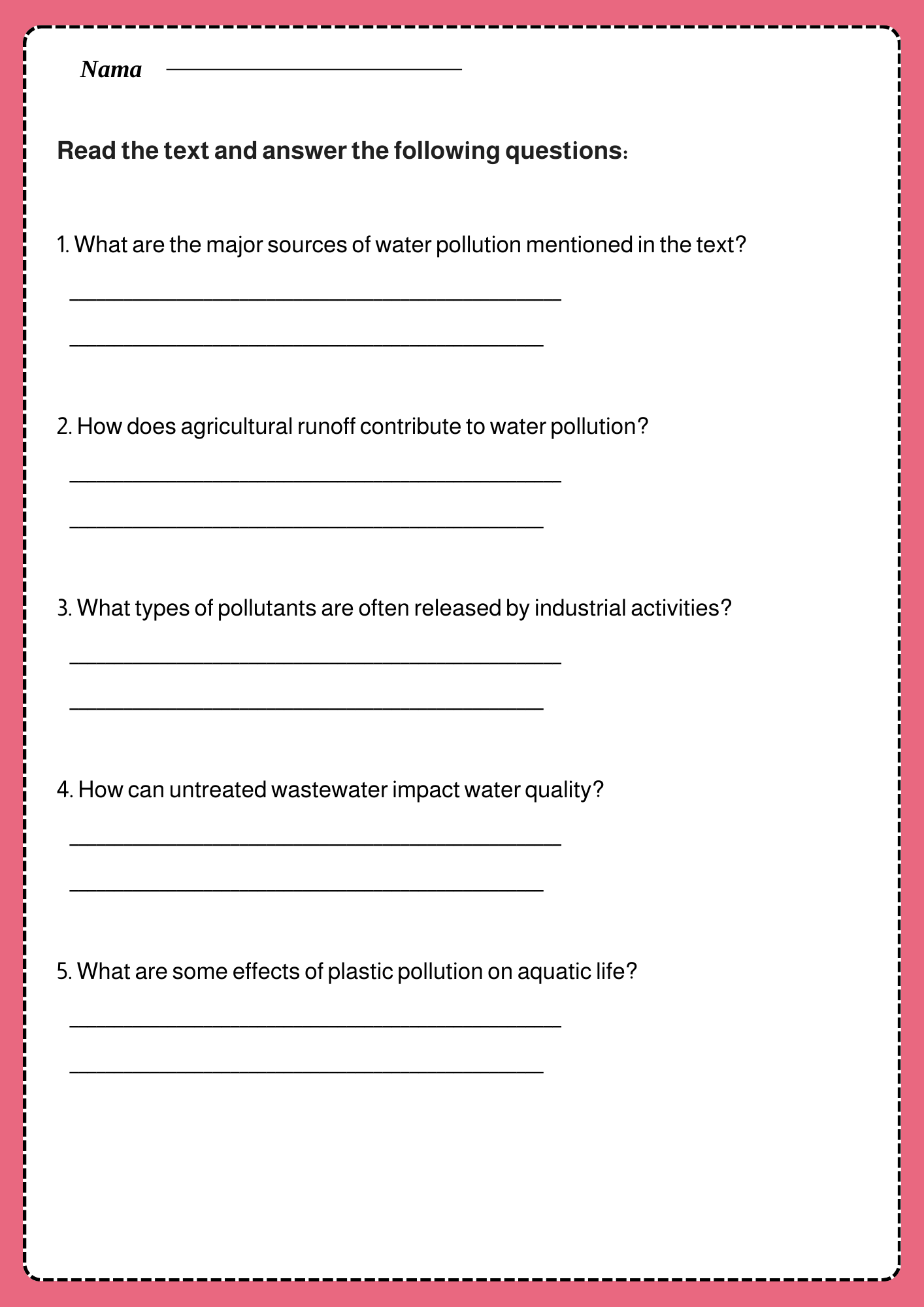
Water pollution is a pressing issue that affects our ecosystems and health. Teaching children about this topic can be impactful, and a Water Pollution Reading Comprehension Worksheet is an effective tool for developing their understanding. This worksheet not only promotes reading skills but also encourages critical thinking about environmental concerns. Here’s how to make the most of this resource.
Understanding the Worksheet’s Purpose
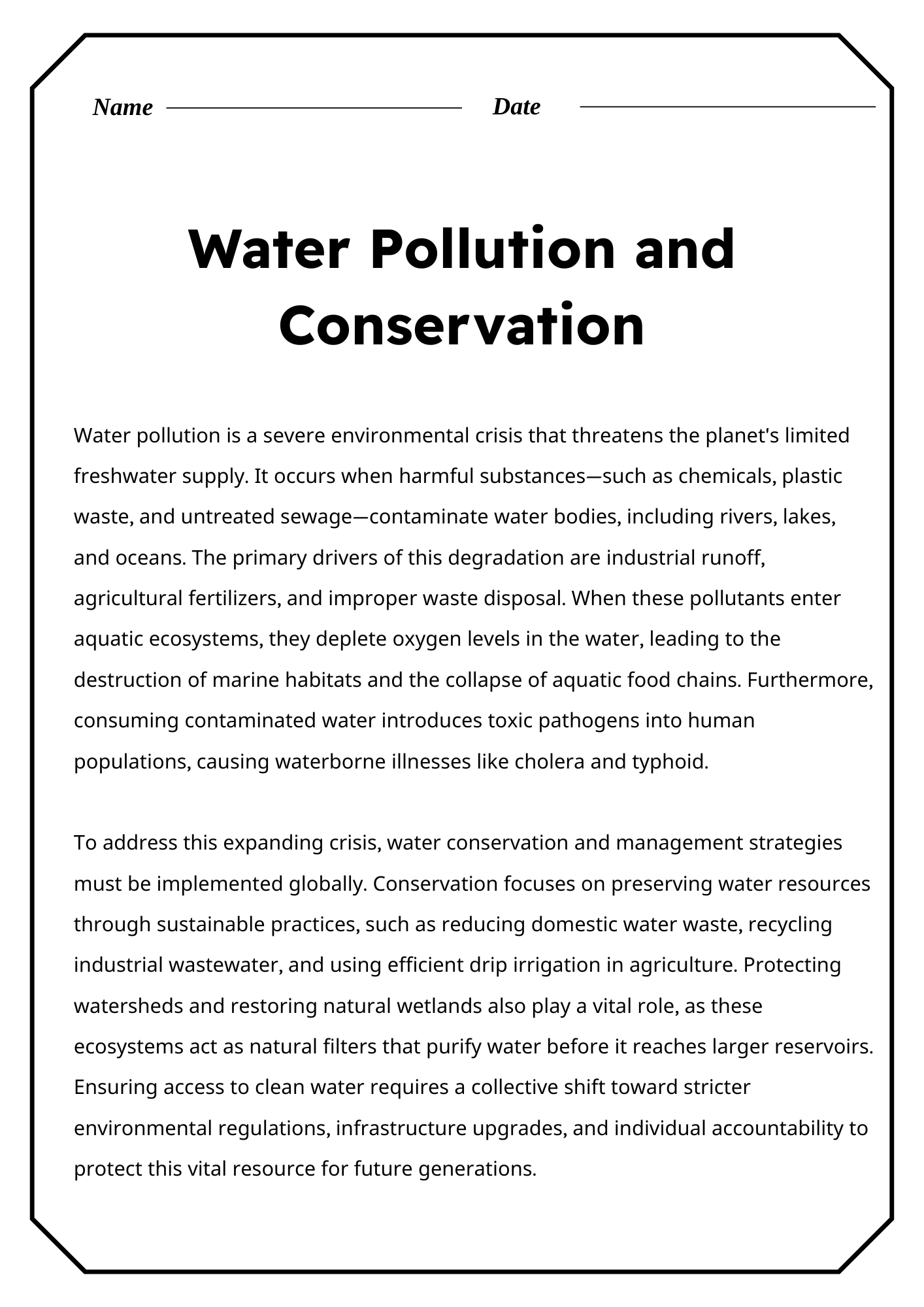
The Water Pollution Reading Comprehension Worksheet is tailored for elementary and middle school students, typically suitable for grades 3 to 8. Its primary goal is to help students grasp the causes and effects of water pollution through engaging reading passages and relevant questions. By integrating comprehension skills with real-world issues, students can better understand the importance of protecting our water resources.
Using this worksheet in your home or homeschool setting allows you to incorporate environmental education into your daily routine. It encourages discussions about how pollution impacts local water bodies, fostering a sense of responsibility among young learners.
Downloading and Printing the Resource
Finding the right resource is the first step. This worksheet is typically available in PDF format, making it easy to download and print. Here’s how to proceed:
- Locate the Worksheet: Search for the Water Pollution Reading Comprehension Worksheet on a printable resource website. Look for a site that provides educational materials tailored for your needs.
- Download the PDF: Once you find the worksheet, click the download button. Ensure you save it in a location where you can easily access it later.
- Print the Worksheet: Use standard letter-sized paper (8.5 x 11 inches) for printing. Portrait layout tends to work best for readability. If you plan to use the worksheet multiple times, consider printing on cardstock for durability.
Setting Up for Effective Learning
After printing, it’s time to prepare for an engaging learning session. Here’s how to set up:
- Choose a Comfortable Workspace: Select a quiet area where the student can focus without distractions. A well-lit table with enough space for materials is ideal.
- Gather Necessary Supplies: Have pencils, highlighters, or colored pens ready for the student to underline key points or take notes. This encourages active reading.
- Review the Content Together: Before diving into the worksheet, briefly discuss what water pollution is. Ask questions like, “What do you think causes water pollution?” This primes their thinking for the reading material.
Engaging With the Worksheet
Now, you’re ready to tackle the Water Pollution Reading Comprehension Worksheet. Follow these steps to maximize its effectiveness:
- Read Aloud: If the student struggles with reading, consider reading the passage together. This builds confidence and allows for immediate discussion of difficult words or concepts.
- Highlight Key Information: Encourage the student to highlight or underline important information as they read. This helps with retention and makes it easier to answer questions later.
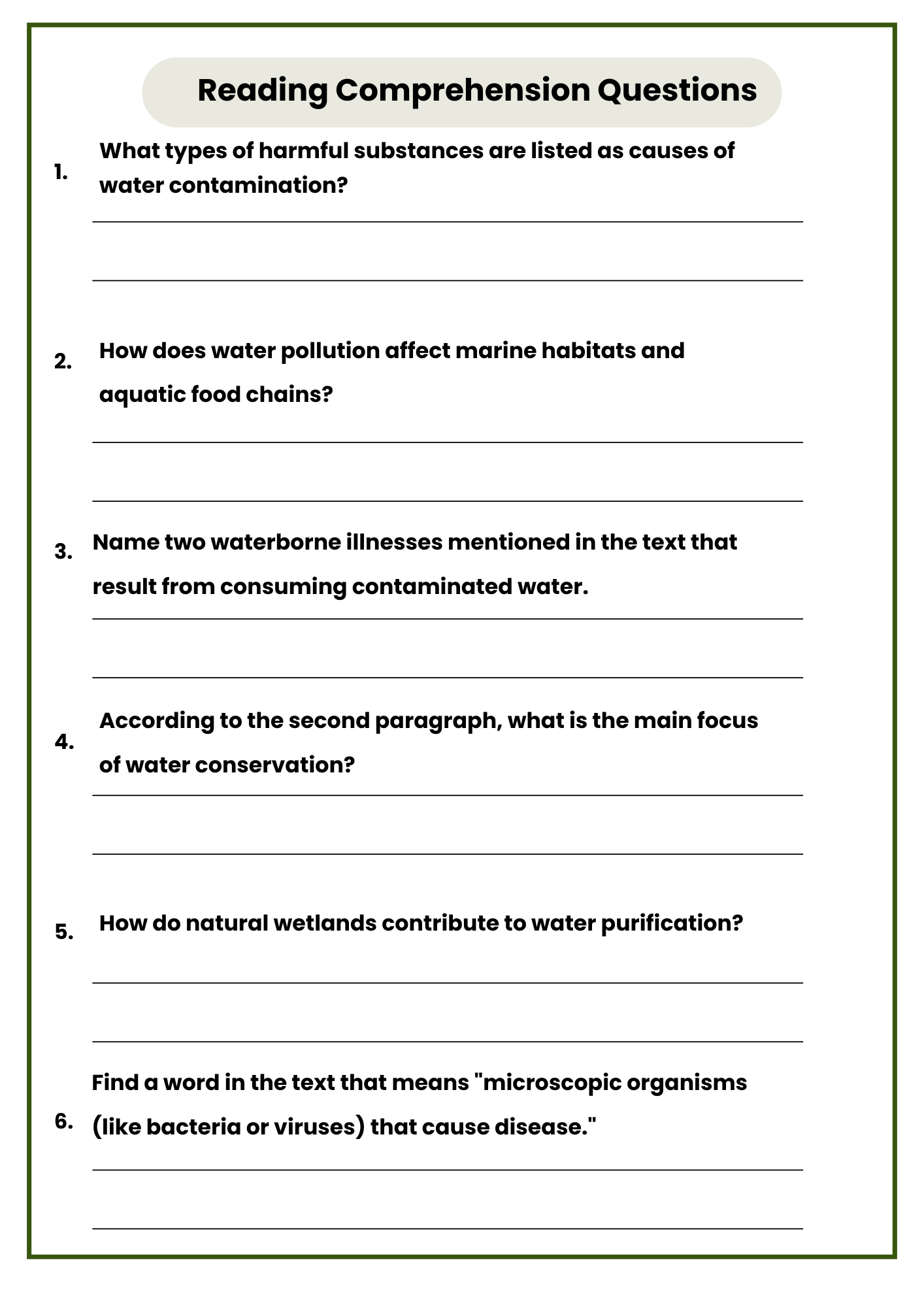
- Discuss the Questions: After completing the reading, go over the comprehension questions together. This allows students to articulate their understanding and reinforces the material. Encourage them to explain their reasoning behind answers.
Extending Learning Beyond the Worksheet
To deepen understanding, consider additional activities related to water pollution:
- Conduct a Local Water Test: If possible, take a field trip to a nearby water source. Bring along simple testing kits to check for pollutants. This hands-on activity will reinforce the concepts learned.
- Create a Poster: Have students create a poster that illustrates the effects of water pollution. This encourages creativity and allows them to express what they have learned visually.
- Write a Reflection: Ask the student to write a short paragraph about what they learned from the worksheet and how they can help reduce water pollution. This personal connection can motivate them to take action.
Using the Water Pollution Reading Comprehension Worksheet effectively can significantly enhance your child’s understanding of environmental issues. By engaging with the material thoughtfully and creatively, you can instill a sense of responsibility for our planet’s water resources. Remember, fostering awareness in young learners today can lead to responsible adults tomorrow.