Printable Third Grade Classroom Interjection Identification Activities
In a bustling classroom, Ms. Taylor noticed that her students were struggling to grasp the concept of interjections. As she glanced around, she saw Jamie, a bright student, raising his hand with enthusiasm but unsure of how to express his excitement. This moment highlighted the importance of teaching interjections in a way that was both engaging and effective. That’s where Printable Third Grade Classroom Interjection Identification Activities come into play, providing teachers with the tools to help students recognize and use interjections confidently.
Understanding Interjections
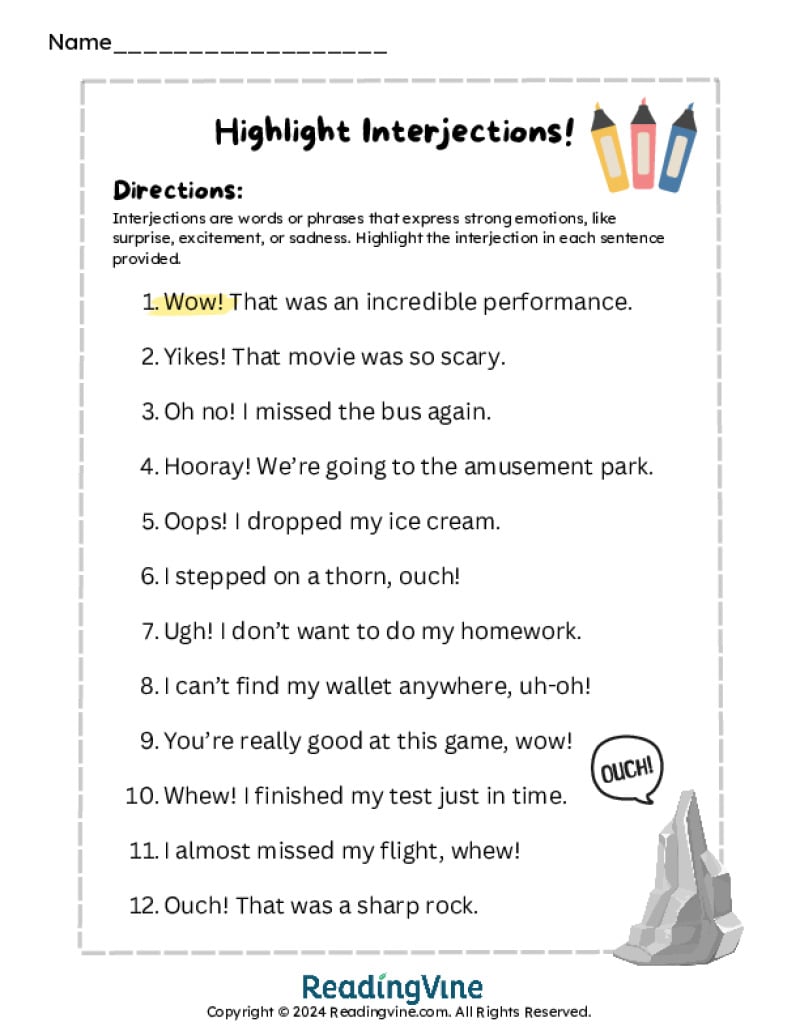
Before diving into the activities, it’s essential to understand what interjections are. Interjections are short words or phrases that express strong emotions or sudden exclamations, such as “Wow!”, “Oh no!”, or “Hooray!” Teaching students to identify these words can enhance their writing and speaking skills, making their communication more expressive.
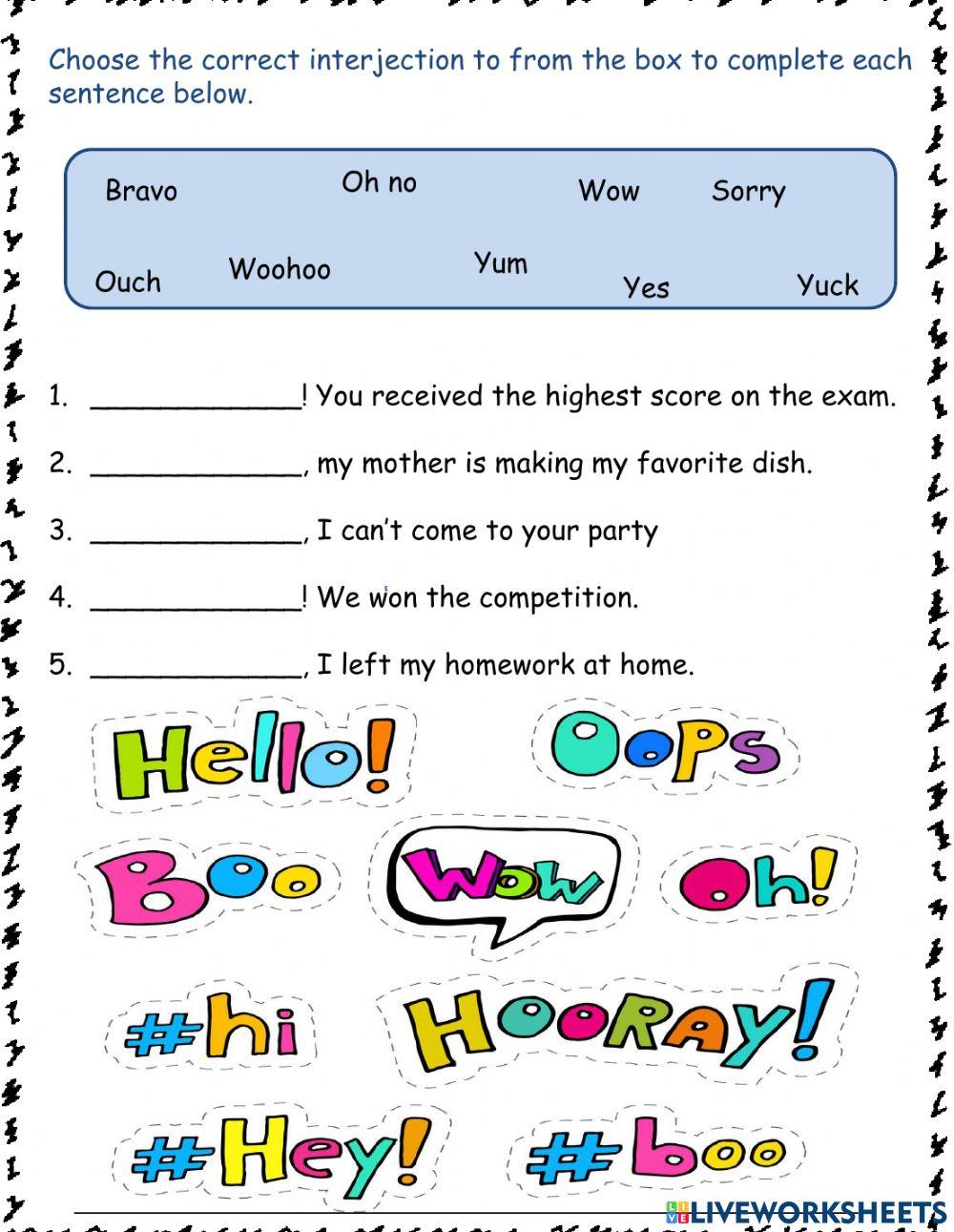
Printable interjection identification activities are designed specifically for third graders. They can help students recognize interjections in sentences and use them appropriately. The activities usually include worksheets that prompt students to underline interjections, fill in missing interjections, or even create their sentences using interjections.
Types of Printable Activities
When it comes to Printable Third Grade Classroom Interjection Identification Activities, variety is key to keeping students engaged. Here are a few types of activities you can incorporate into your lesson plans:
Worksheets
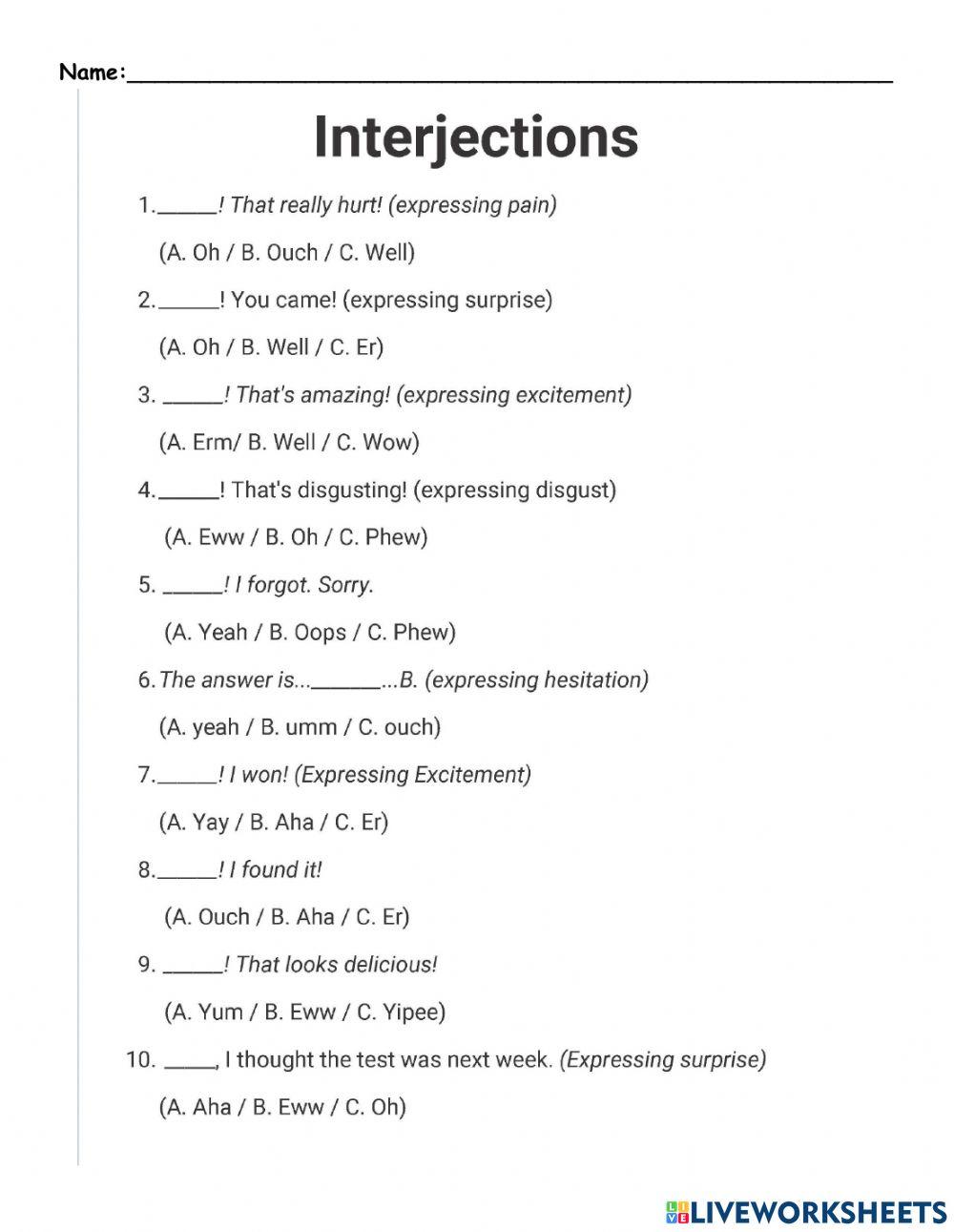
Worksheets are a staple in any classroom. They can include various exercises, such as:
- Identification Exercises: Students read sentences and underline the interjections. For example, “Wow, that’s an amazing drawing!” encourages students to recognize “Wow” as an interjection.
- Fill-in-the-Blank Sentences: Create sentences with missing interjections for students to complete. This helps them think critically about which interjection best fits the emotion being expressed.
- Matching Activities: Pair interjections with corresponding emotions. For instance, match “Yay!” with excitement and “Oops!” with a mistake.
Interactive Games
Games can make learning about interjections fun. Consider activities like:
- Interjection Bingo: Create bingo cards with various interjections. As you read sentences aloud, students can mark their cards when they hear an interjection.
- Charades: Students act out sentences that contain interjections, while their peers guess the interjection being portrayed. This adds a physical element to learning and reinforces understanding through movement.
Group Activities
Collaboration can enhance learning. Here are some group activities:
- Sentence Construction: In small groups, students create sentences using a list of interjections. This encourages teamwork and creativity.
- Story Creation: Have students write a short story that includes a certain number of interjections. They can share their stories with the class, showcasing their understanding of how interjections enhance narrative flow.
Scheduling the Activities
To maximize the effectiveness of these Printable Third Grade Classroom Interjection Identification Activities, consider spreading them out over a week. This approach allows for repetition and reinforcement of the skill. Here’s a suggested schedule:
- Day 1: Introduce interjections and complete an identification worksheet.
- Day 2: Conduct a matching activity and discuss the emotions behind each interjection.
- Day 3: Play Interjection Bingo to reinforce recognition in a fun setting.
- Day 4: Engage in group activities where students create sentences or short stories.
- Day 5: Review the week’s learning with a fun quiz or a class discussion.
This spaced-out approach not only reinforces learning but also gives students time to absorb and practice the new skill.
Tips for Effective Use
Using Printable Third Grade Classroom Interjection Identification Activities effectively involves a few practical considerations:
- Paper Quality: For worksheets that will be reused, consider printing on cardstock. It holds up better to repeated handling and can be laminated for durability.
- Print Settings: If you’re using color, ensure your printer is set to high-quality print. This makes the activities more visually appealing and engaging for students.
- Adaptability: Feel free to modify worksheets to suit your students’ varying levels of understanding. Some may need simpler sentences, while others can handle more complex structures.