Printable Coin Equivalence Activities For Kindergarten Students
In a cozy corner of her living room, Sarah sits with her five-year-old son, Jake, as they flip through colorful worksheets filled with coins and playful illustrations. Today, they’re diving into Printable Coin Equivalence Activities For Kindergarten Students, designed to make learning about money both fun and effective. These activities are perfect for parents and teachers looking to introduce young learners to the concept of coin equivalence while keeping their attention engaged.
Understanding Coin Equivalence
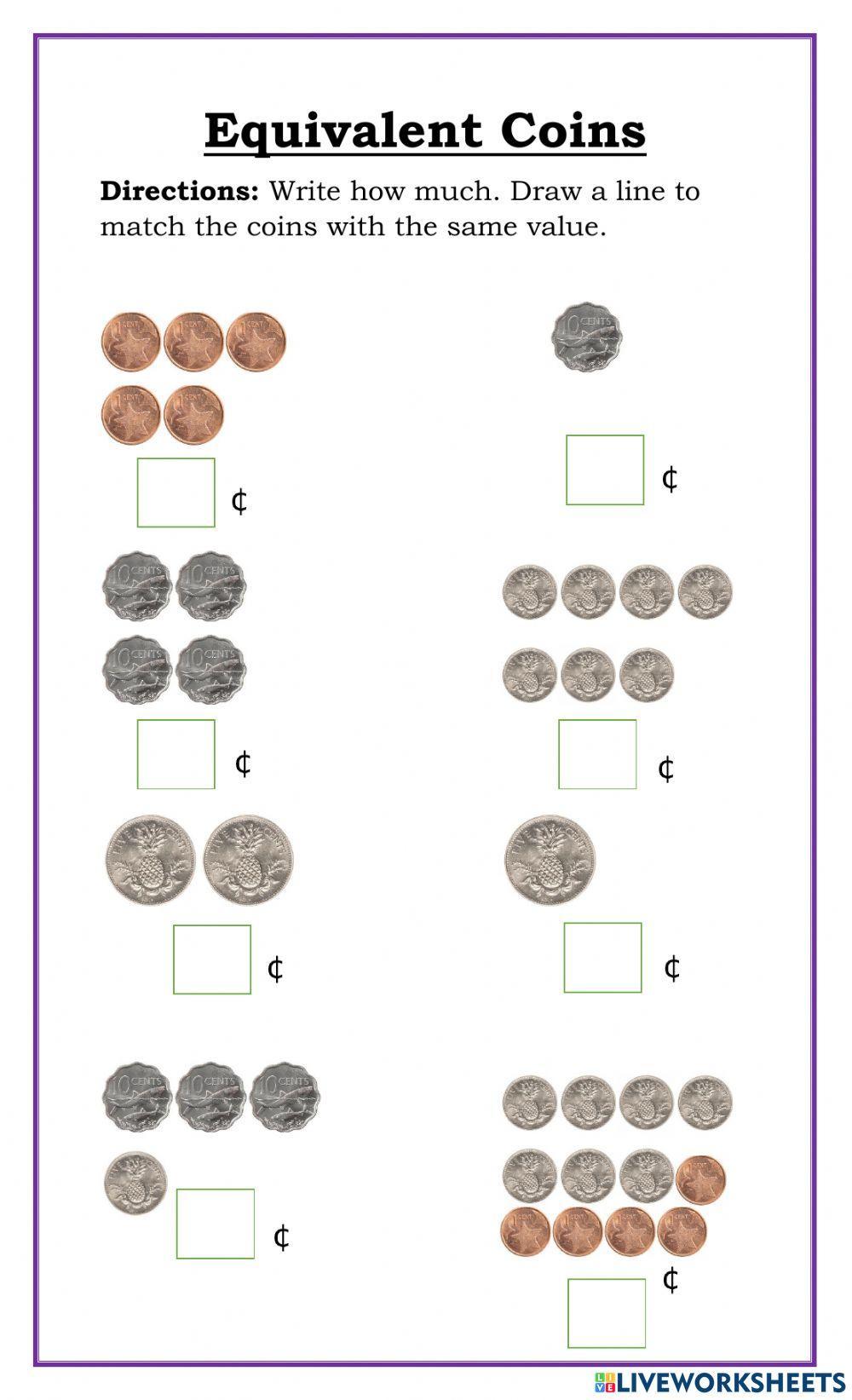
Coin equivalence refers to the idea that different coins can have the same value. For example, a quarter is equivalent to two dimes and a nickel. Understanding this concept is crucial for young students as they begin to learn about money management. Printable activities allow children to visually see and manipulate coins, reinforcing their understanding of value through hands-on experience.
When using these activities, it’s important to explain the different denominations of coins: pennies, nickels, dimes, and quarters. By introducing the concept of equivalence with tangible examples, children can better grasp the relationships between these coins.
Effective Printable Activities for Coin Equivalence
There are several types of printable coin equivalence activities that can be easily integrated into your child’s learning routine. Here are a few engaging options:
Coin Matching Worksheets
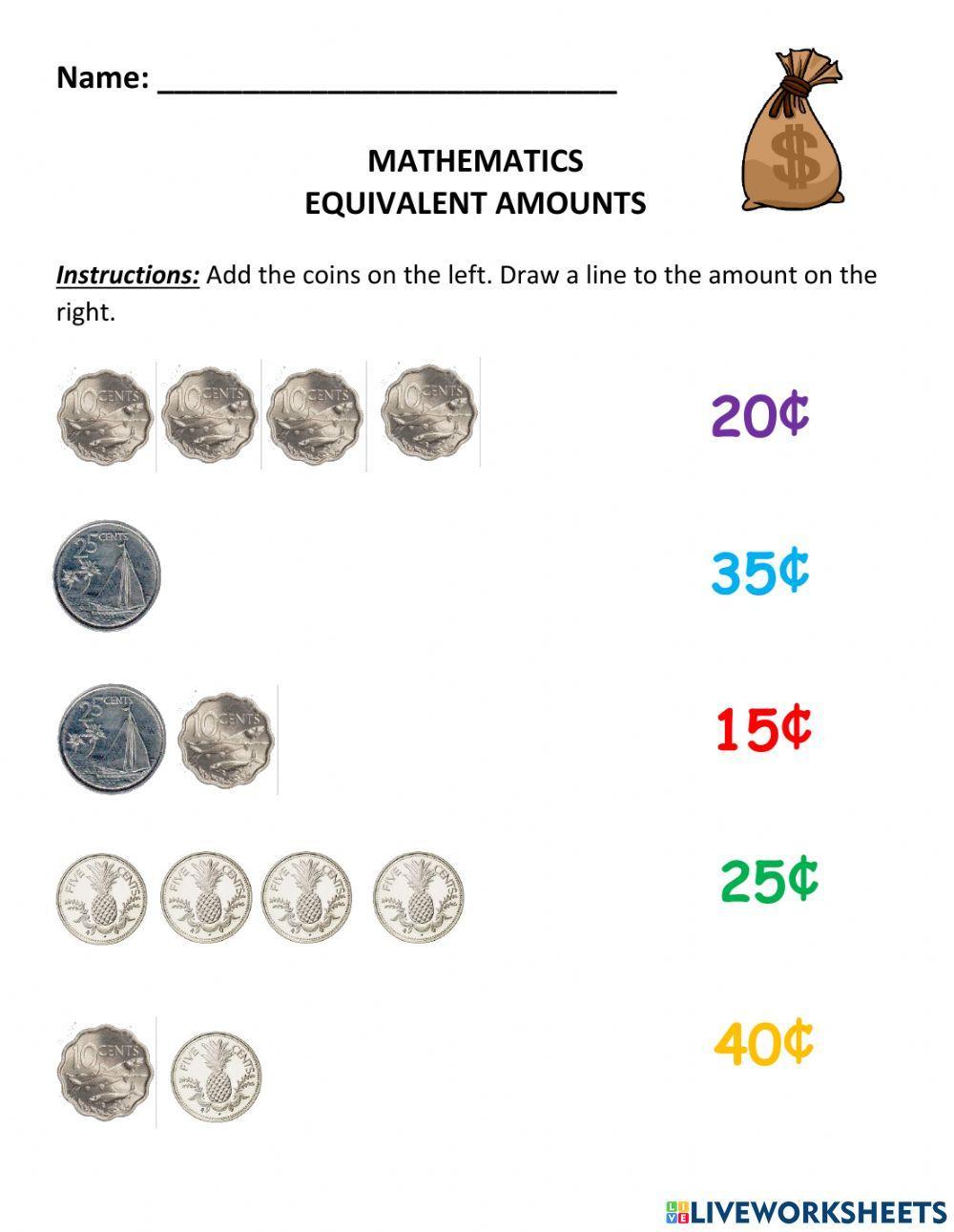
Coin matching worksheets typically include images of various coins and their corresponding values. Children can draw lines between coins and their values or color them according to the amounts. This visual representation helps reinforce their understanding of each coin’s worth.
- Setup: Print the worksheet and provide crayons or markers.
- Activity: Have the child match coins to their values by drawing lines or coloring them in.
- Supervision: Offer guidance as needed, asking questions like, “How many nickels make a dime?”
Coin Equivalence Flashcards
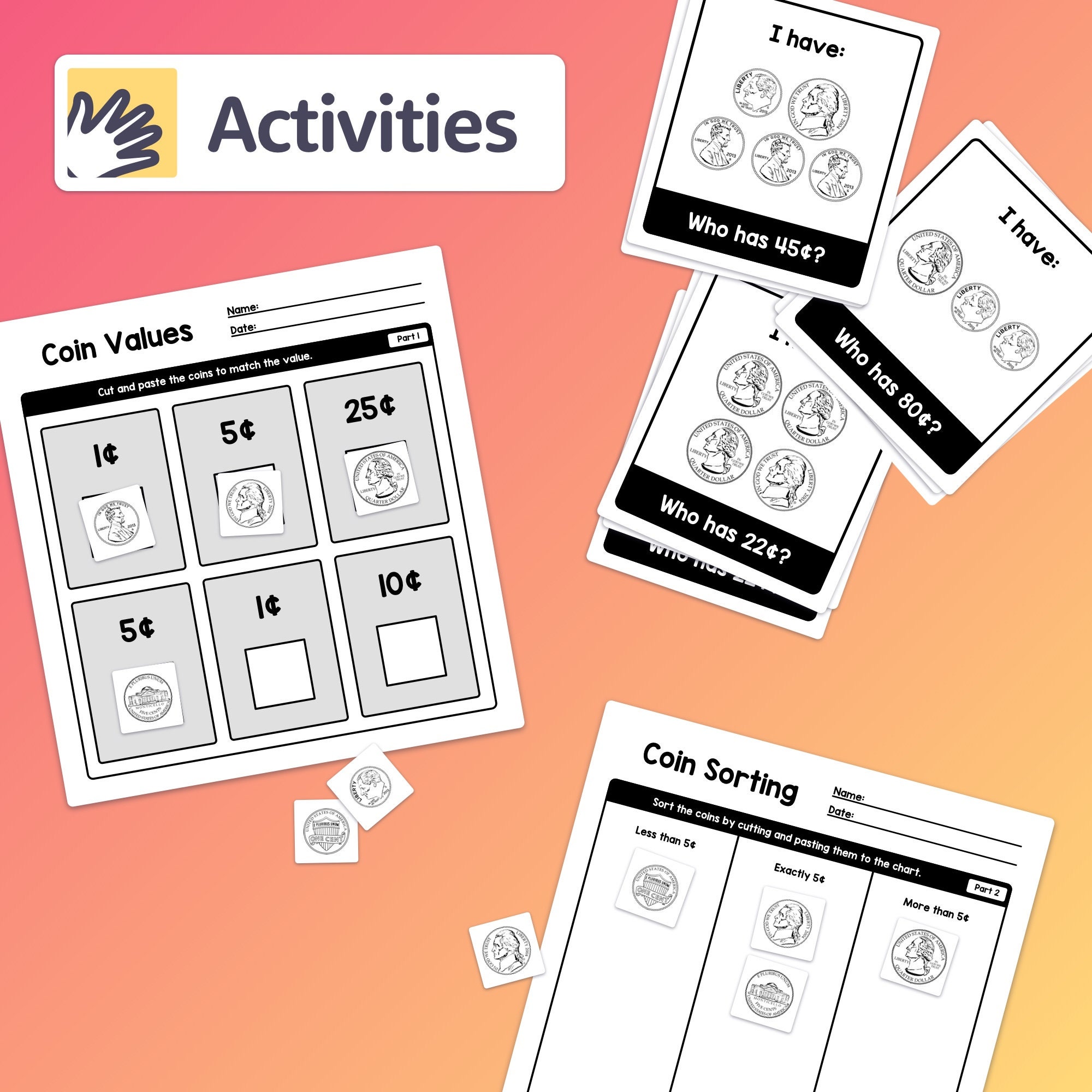
Flashcards can be a fun way to reinforce learning. Create cards with images of coins on one side and their equivalent values on the other. Kids can quiz themselves or play memory games with these cards.
- Setup: Print and cut out the flashcards, then laminate them for durability.
- Activity: Use them for self-quizzing or pair up for a fun memory match.
- Supervision: Encourage children to explain their reasoning for each match they make.
Coin Sorting Activities
Sorting activities provide a hands-on way for children to learn about coin equivalence. You can create a printable sorting mat that features different sections for each type of coin. Children can use real or play coins to match and sort according to value.
- Setup: Print the sorting mat and gather a collection of coins (real or play).
- Activity: Have the child sort the coins into the correct sections on the mat.
- Supervision: Discuss the value of each coin as they sort, asking, “Which coins add up to a quarter?”
Integrating Activities Into Daily Routines
Incorporating Printable Coin Equivalence Activities into your daily routine can make learning about money feel seamless and natural. Here are a few tips to integrate these activities effectively:
Snack Time Coin Count
Use snack time as an opportunity to practice coin equivalence. For example, if you provide a few different snacks, assign each a coin value, and ask your child to figure out how many of each snack they can have based on a given amount of money.
- Setup: Assign values to snacks (e.g., a cookie = 5 cents).
- Activity: Have your child calculate how many snacks they can “buy” with a quarter.
- Supervision: Support them as they count and calculate, offering hints if they struggle.
Play Store Role-Playing
Set up a mini store at home where children can use play money to “purchase” items. This role-playing scenario is an excellent way for children to practice coin equivalence in a real-world context.
- Setup: Create price tags for items using different coin values.
- Activity: Let your child “shop” using play money, encouraging them to use different coins to pay.
- Supervision: Guide them in making change and understanding how different coins can combine to meet the price.
Tips for Effective Learning
Here are some additional tips to ensure that your child gets the most out of Printable Coin Equivalence Activities:
- Keep it Fun: Use games and playful language to make learning feel enjoyable. Incorporate songs or rhymes that relate to coins.
- Be Patient: Children may take time to grasp these concepts fully. Patience is key. Offer praise for effort, not just correct answers.
- Reinforce with Real-Life Examples: Whenever possible, use real coins in everyday situations, like shopping or saving. This practical application reinforces the lessons learned.
Choosing the Right Format
When selecting printable resources, consider the following formats that work best for your needs:
- PDF Format: PDFs are perfect for maintaining formatting across different devices and printers. They usually print well without issues.
- Portrait vs. Landscape: Portrait layout often works best for worksheets, while landscape may be better for sorting mats or flashcards. Choose based on the activity type.
With these Printable Coin Equivalence Activities For Kindergarten Students, you’ll find that teaching this important concept can be both effective and enjoyable. By incorporating engaging resources and practical activities into your routine, you’ll foster your child’s understanding of money in a way that sticks.