Free Printable Fifth Grade Interjection Identification Exercises
Understanding interjections can be a fun and engaging way for fifth graders to enhance their language skills. These Free Printable Fifth Grade Interjection Identification Exercises are designed to help students identify and use interjections effectively. By integrating these worksheets into your lesson plans, you can provide students with the tools they need to recognize interjections in sentences and understand their role in communication.
What Are Interjections?
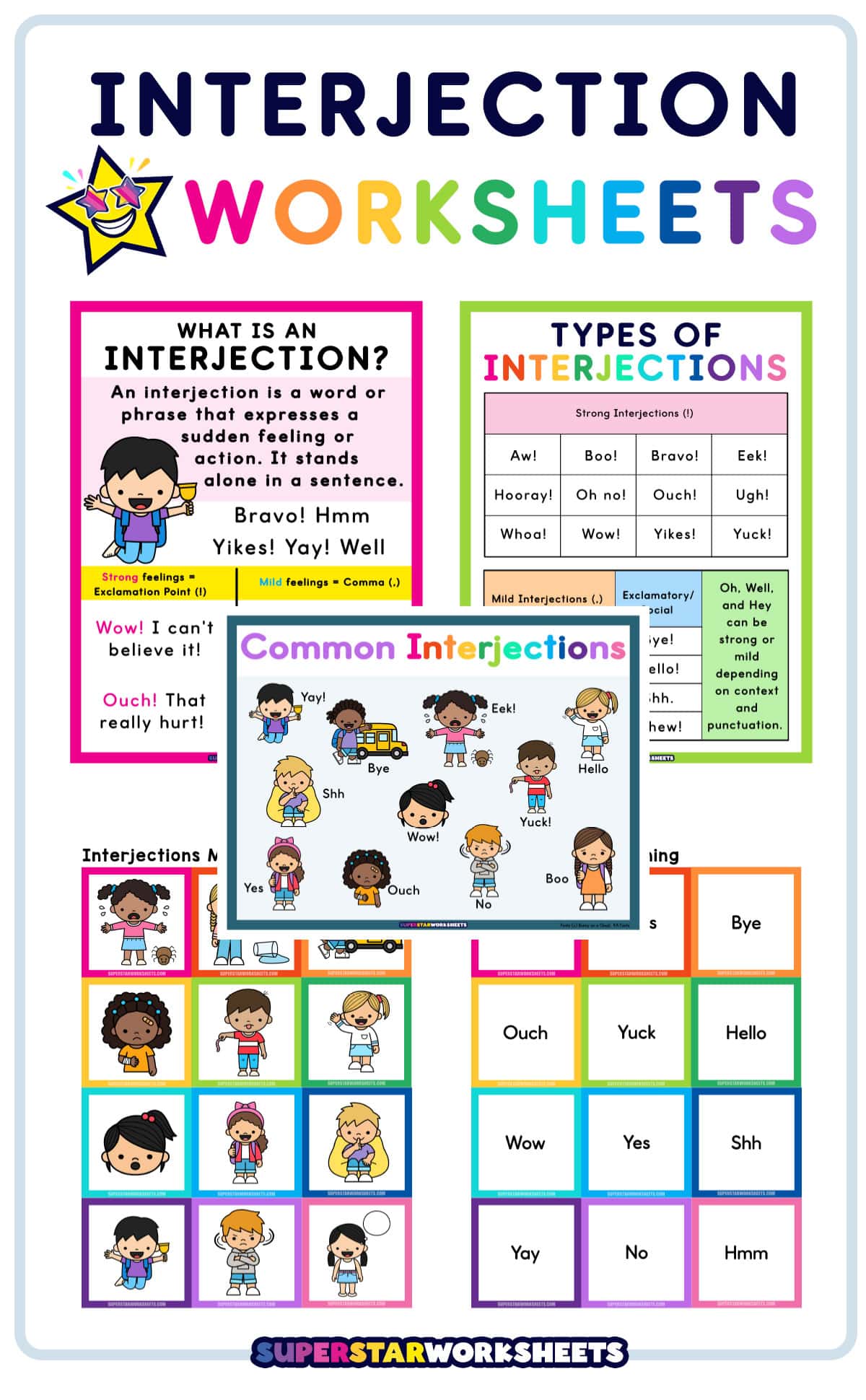
Interjections are words or phrases that express strong emotions or sudden bursts of feeling. They are often standalone elements in a sentence and can set the tone for what follows. Common examples include words like “Wow!”, “Oh no!”, and “Yay!” Teaching fifth graders about interjections helps them expand their vocabulary and improve their writing by adding emotional nuance and expression.
How to Use the Interjection Identification Exercises
These exercises can be used in various classroom settings, including traditional classrooms, homeschooling, or even as supplemental resources for parents looking to enhance their children’s learning at home.
Incorporating the Worksheets Into Your Curriculum
- Weekly Practice: Spread the exercises across the week. For instance, use one worksheet per day to reinforce the concept of interjections. This approach allows students to practice identification and usage without overwhelming them.
- Group Activities: Consider organizing students into small groups. Each group can work on different exercises, discussing their answers and reasoning. This collaborative approach encourages peer learning and deeper understanding.
- Interactive Sessions: After students complete their worksheets, hold a class discussion. Ask students to share their favorite interjections and create sentences using them. This not only reinforces their learning but also builds their confidence in using new vocabulary.
- Homework Assignments: Assign these worksheets as homework to encourage independent learning. This allows students to practice at their own pace and gives parents insight into what their children are learning.
Understanding the Layout
The printable exercises typically include a variety of activities, such as:
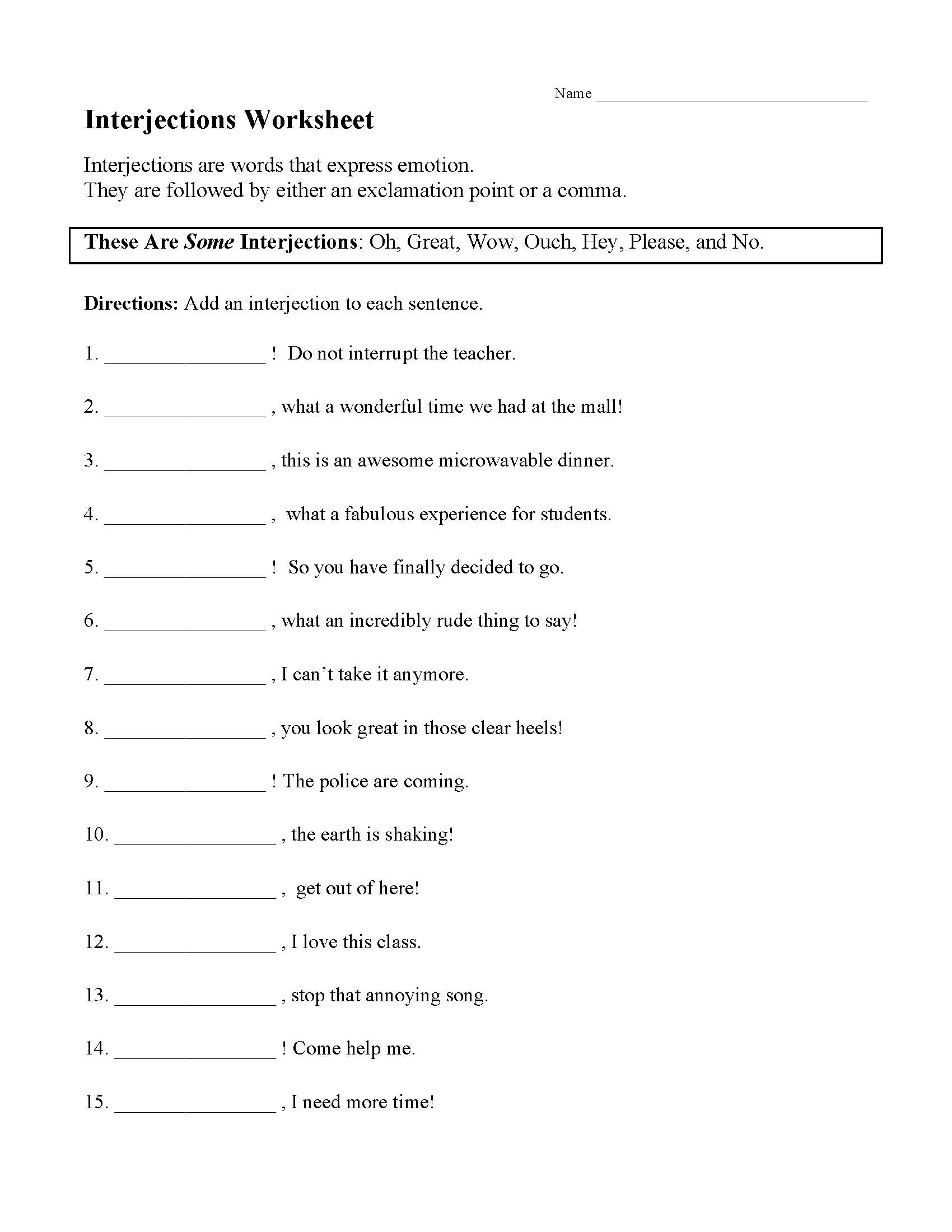
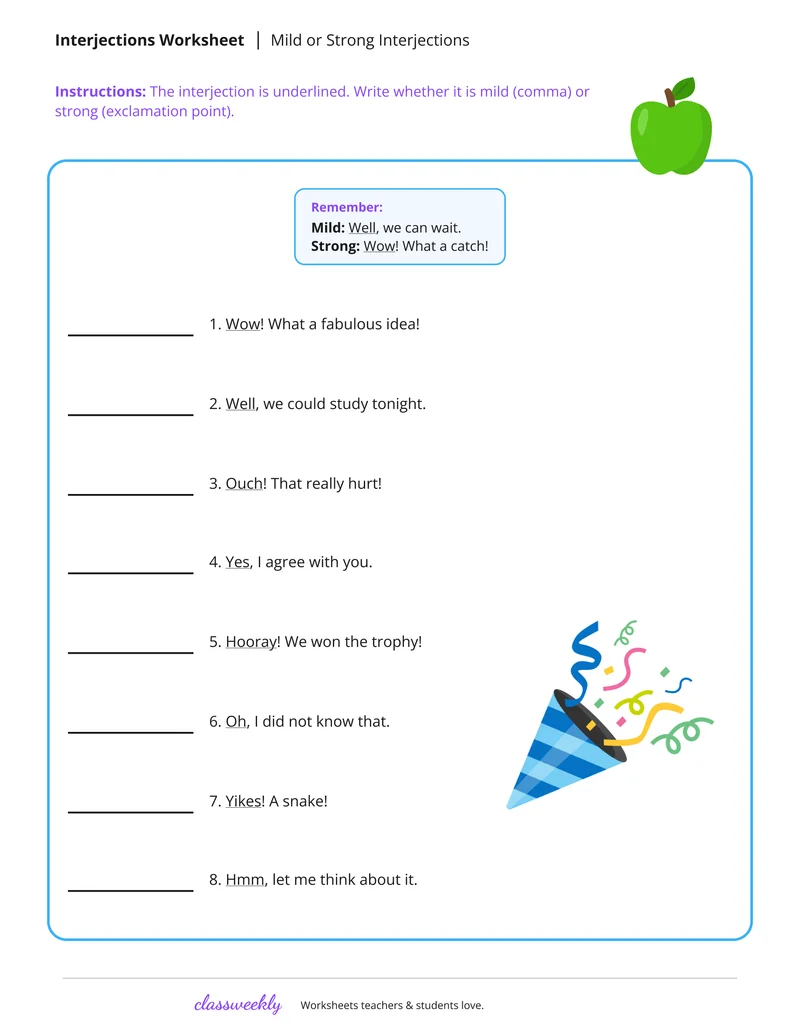
- Identification: Students read sentences and underline or highlight interjections.
- Fill-in-the-Blank: Sentences are provided with missing interjections, prompting students to think creatively.
- Sentence Creation: Students write their sentences using specific interjections, helping them practice context and application.
Choosing the Right Format
When downloading your Free Printable Fifth Grade Interjection Identification Exercises, consider the following:
- PDF Format: This format is usually best for preserving layout and ensuring that the worksheets print correctly without any formatting issues. Always opt for PDF when available, as it will maintain the integrity of your document.
- Portrait vs. Landscape: Most worksheets are designed in portrait orientation, which is easier to handle and print on standard letter-sized paper (8.5 x 11 inches). If you’re using a home printer, portrait layout tends to work better for most settings.
- Paper Type: For durability, especially if students will be using colored pencils or markers, consider printing on cardstock. This material holds up better and is less likely to tear or smudge.
Additional Resources for Learning About Interjections
While the printable exercises are a fantastic tool, supplementing them with various resources can enhance the learning experience even further. Here are some ideas:
- Interactive Games: Look for online games that focus on interjections. Websites like Education.com or ABCmouse provide engaging platforms where students can practice interjections interactively.
- Books and Stories: Incorporate reading sessions that highlight interjections. Ask students to identify interjections in their favorite stories and discuss how those words affect the narrative.
- Creative Writing Prompts: Encourage students to write short stories or dialogues that incorporate interjections. This not only reinforces their learning but also sparks creativity.
Monitoring Progress
To effectively assess your students’ understanding of interjections, consider the following strategies:
- Quizzes: After a week of practice, give a short quiz that requires students to identify interjections in sentences. This will help you gauge their comprehension and retention.
- Peer Review: Have students exchange their sentences or short stories with classmates for feedback. This peer review process can highlight different uses of interjections and promote collaborative learning.
- Reflective Journals: Encourage students to maintain a journal where they reflect on what they’ve learned about interjections. This can help solidify their knowledge and give you insight into their understanding.
Immediate Tip
To get started, download your first set of worksheets today and print them out. Set aside time in your lesson plan this week to introduce interjections, and watch your students’ language skills flourish!