First Grade Syllable Types Identification Review Worksheets
In a cozy classroom, Ms. Davis watched as her students eagerly flipped through their colorful worksheets, each adorned with fun illustrations and engaging activities. Today’s focus was on a crucial skill: identifying syllable types. The First Grade Syllable Types Identification Review Worksheets provided just the right mix of challenge and fun, allowing her students to practice their phonics skills while building reading confidence.
Understanding Syllable Types
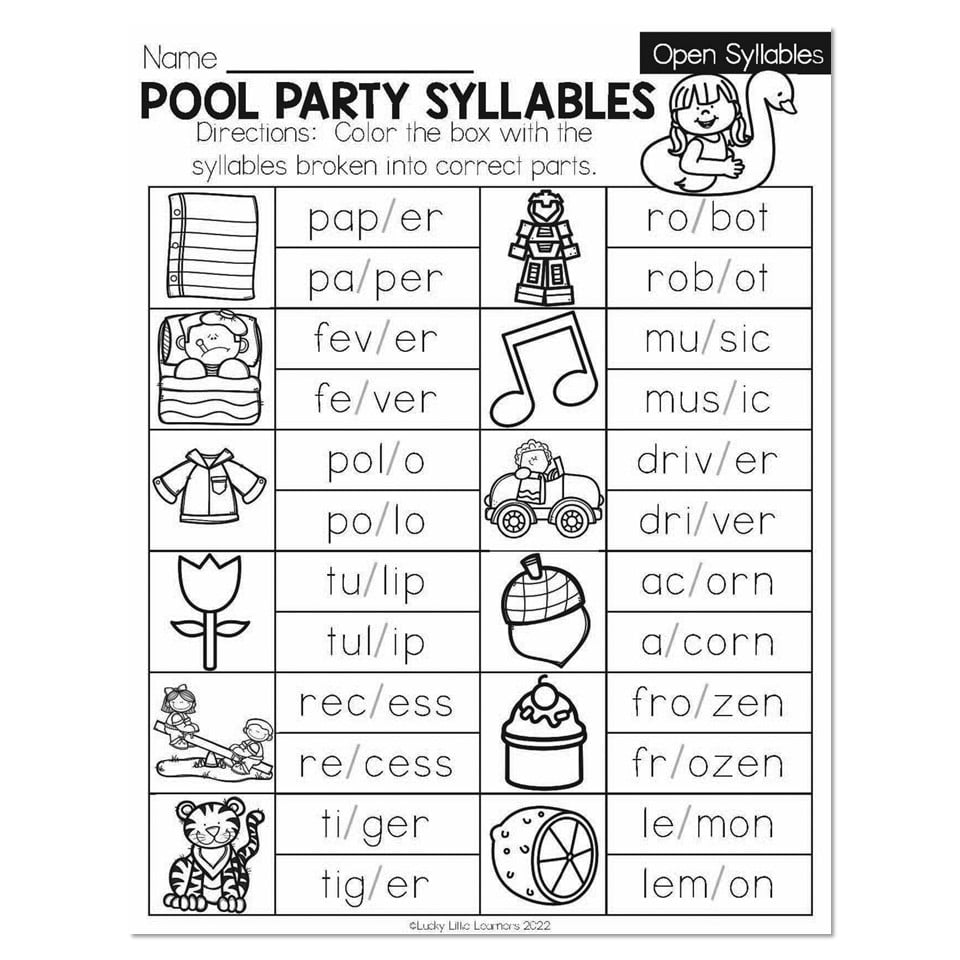
Before diving into the worksheets, it’s crucial to understand what syllable types are and why they matter. Syllables are the building blocks of words, and knowing how to identify different types can significantly enhance a child’s reading and spelling abilities. In first grade, students typically learn about six types of syllables:
- Closed Syllables: Syllables that end in a consonant, like “cat” or “dog.”
- Open Syllables: Syllables that end in a vowel, such as “go” or “me.”
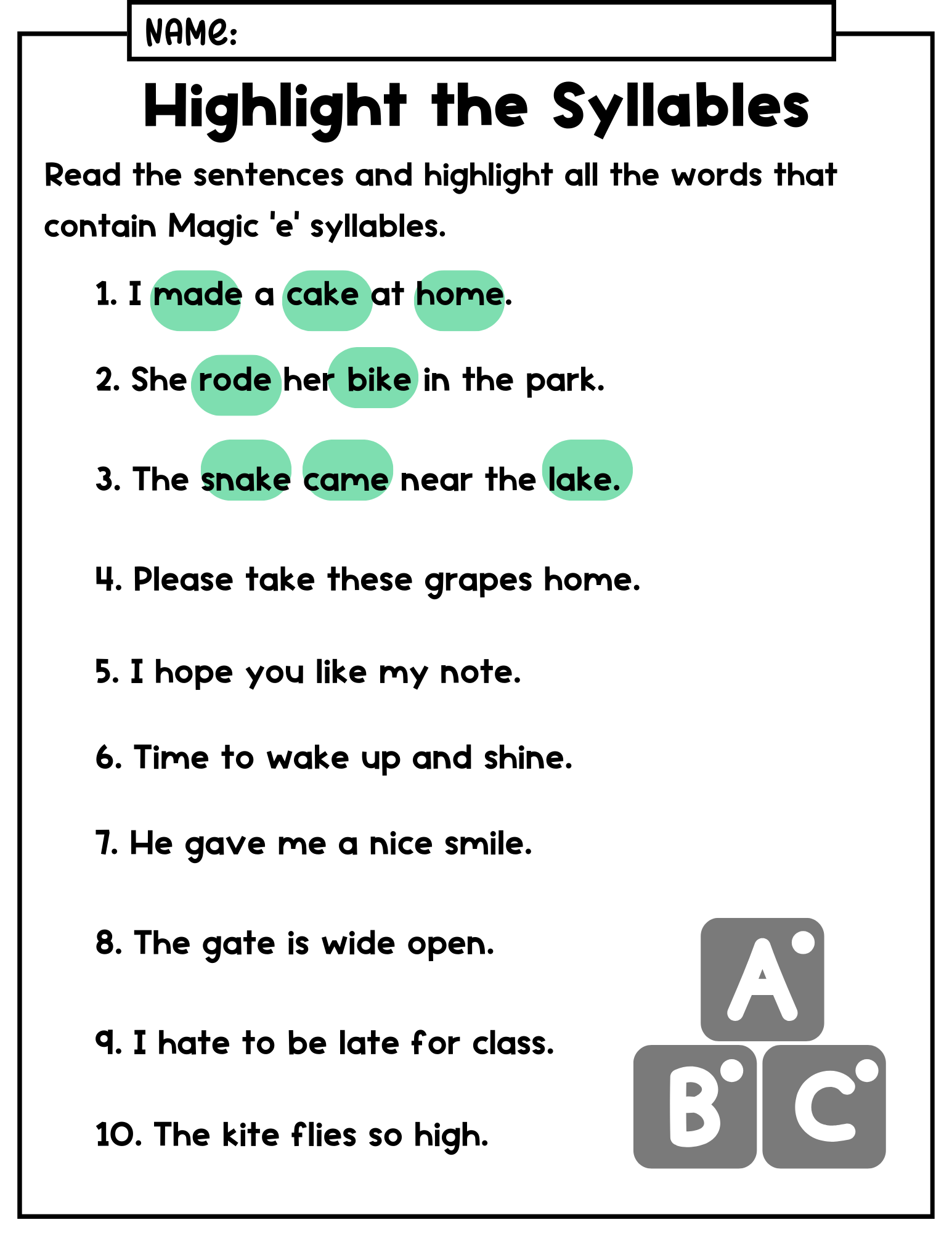
- Silent E Syllables: Syllables that contain a silent ‘e’ at the end, like “make” or “time.”
- Vowel Team Syllables: Syllables with two vowels together, such as “team” or “boat.”
- R-controlled Syllables: Syllables that contain a vowel followed by ‘r,’ like “car” or “her.”
- Consonant-le Syllables: Syllables that end with a consonant followed by ‘le,’ such as “table” or “candle.”
By using the First Grade Syllable Types Identification Review Worksheets, students will become familiar with these syllable types, making it easier for them to decode unfamiliar words.
Engaging Activities for Independent Practice
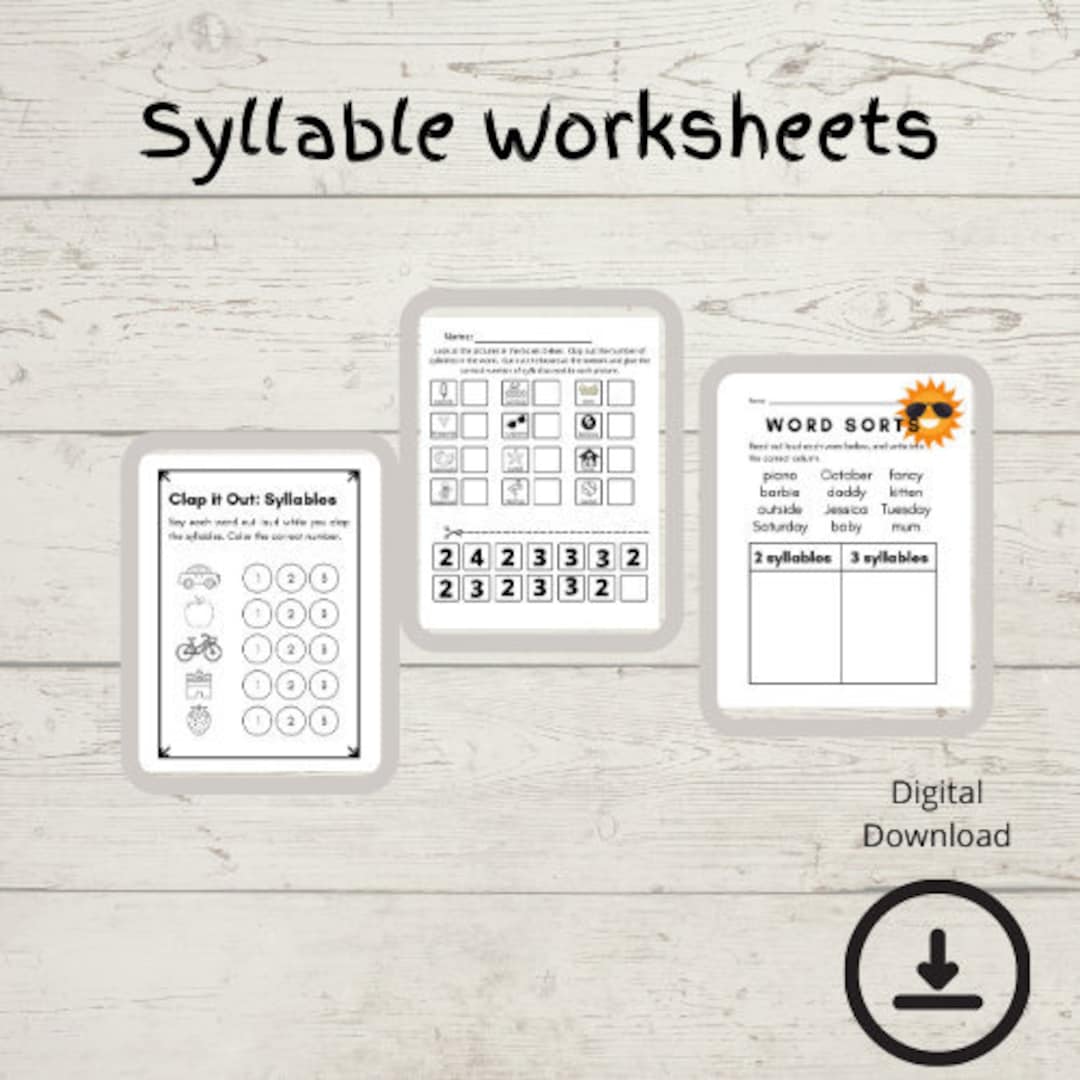
These worksheets offer a variety of activities designed for independent practice, which is essential for reinforcing skills. Here are some engaging tasks you might find:
- Sorting Syllables: Students can cut out words and sort them into the correct syllable type categories. This hands-on approach makes learning tactile and fun.
- Fill-in-the-Blank Exercises: Worksheets with sentences where students fill in the blanks with the correct syllable type words reinforce their understanding in context.
- Color-Coding: Using colored pencils, students can color-code syllable types within words, helping them visualize the differences.
To help ensure that your students can work independently, provide clear instructions at the top of each worksheet. Simple language and visual cues can go a long way in helping first graders understand what they need to do.
Tips for Effective Implementation
When using the First Grade Syllable Types Identification Review Worksheets, consider these practical tips:
- Print on Cardstock: Using cardstock instead of regular paper can make the worksheets more durable, especially if you plan to reuse them. This is beneficial in a classroom setting where many hands will be on the materials.
- Use Portrait Orientation: For most printers, portrait layout tends to work better, making it easier for students to handle the worksheets.
- Incorporate in Centers: If you’re teaching in a classroom, consider including these worksheets in a literacy center. This allows students to practice at their own pace while you focus on small groups.
For homeschoolers, these worksheets can easily fit into your daily routine. Set aside a specific time each day for phonics practice, and let your child choose which worksheet to work on. This not only gives them a sense of control but also keeps them engaged.
Assessing Progress With Syllable Types
As your students work through the First Grade Syllable Types Identification Review Worksheets, it’s important to assess their understanding. Here are some ways to gauge their progress:
- Observation: Take note of how your students are interacting with the worksheets. Are they able to complete tasks independently? Are they asking questions or showing confusion?
- Follow-up Activities: After completing the worksheets, consider having a short quiz or a group discussion where students can share what they learned about syllable types.
- Feedback: Provide immediate feedback on their work. This could be as simple as a sticker for correct answers or a quick chat about what they found challenging.
By regularly assessing their progress, you can tailor future lessons to target specific areas where they may need more support.
Making Learning Fun
To keep the excitement alive while learning about syllables, consider incorporating games and technology. Here are a few ideas:
- Interactive Apps: There are various educational apps focused on phonics and syllable identification. These can be great supplements to the worksheets.
- Syllable Hunt: Create a classroom or home syllable hunt where students find objects around them that fit specific syllable types. This can be a fun way to integrate movement and learning.
- Group Games: Play games like “Syllable Bingo” where students mark off words that match the syllable type being called out. This encourages listening skills and reinforces their learning.
Using the First Grade Syllable Types Identification Review Worksheets in combination with these fun activities can make phonics practice enjoyable and effective.
Incorporating these worksheets into your teaching toolkit can be a game-changer for first graders learning to navigate the world of syllables. By providing clear instructions, engaging activities, and continuous assessment, you can support your students in becoming confident readers. If you are a teacher in a classroom, a parent homeschooling, or a caregiver looking to supplement learning, these resources are designed to fit seamlessly into your educational plans. Choosing sturdy paper or adding exciting games can make all the difference in how these worksheets are received, ensuring that students not only learn but enjoy the process.