Eighth Grade Integer Subtraction Practice Review Worksheets
Eighth Grade Integer Subtraction Practice Review Worksheets are a vital resource for teachers looking to reinforce their students’ understanding of integer subtraction. Unlike many generic worksheets available, these specific worksheets are tailored to the nuances of eighth-grade math, focusing on the challenges that students often face when dealing with negative numbers and complex subtraction problems. Here’s how you can effectively use these worksheets in your classroom or homeschool setting.
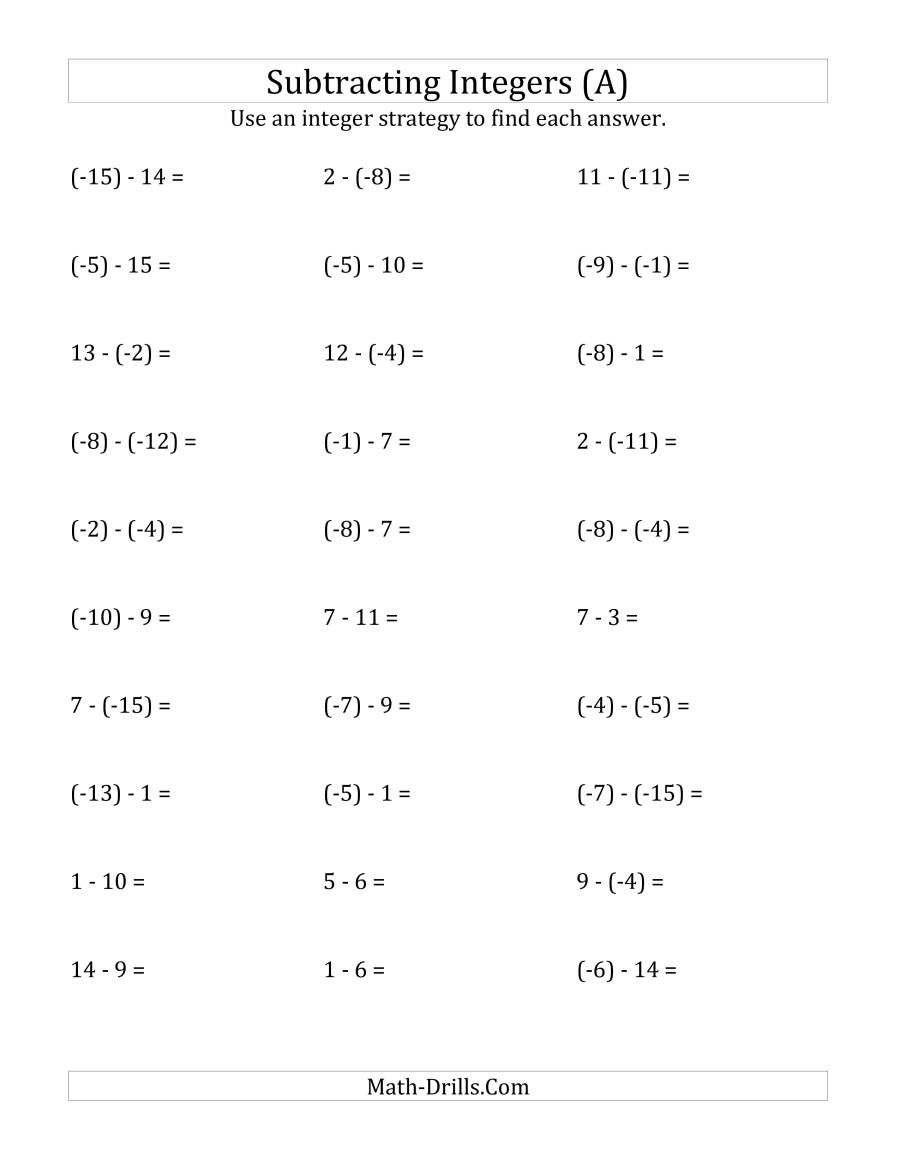
Understanding Integer Subtraction for Eighth Graders
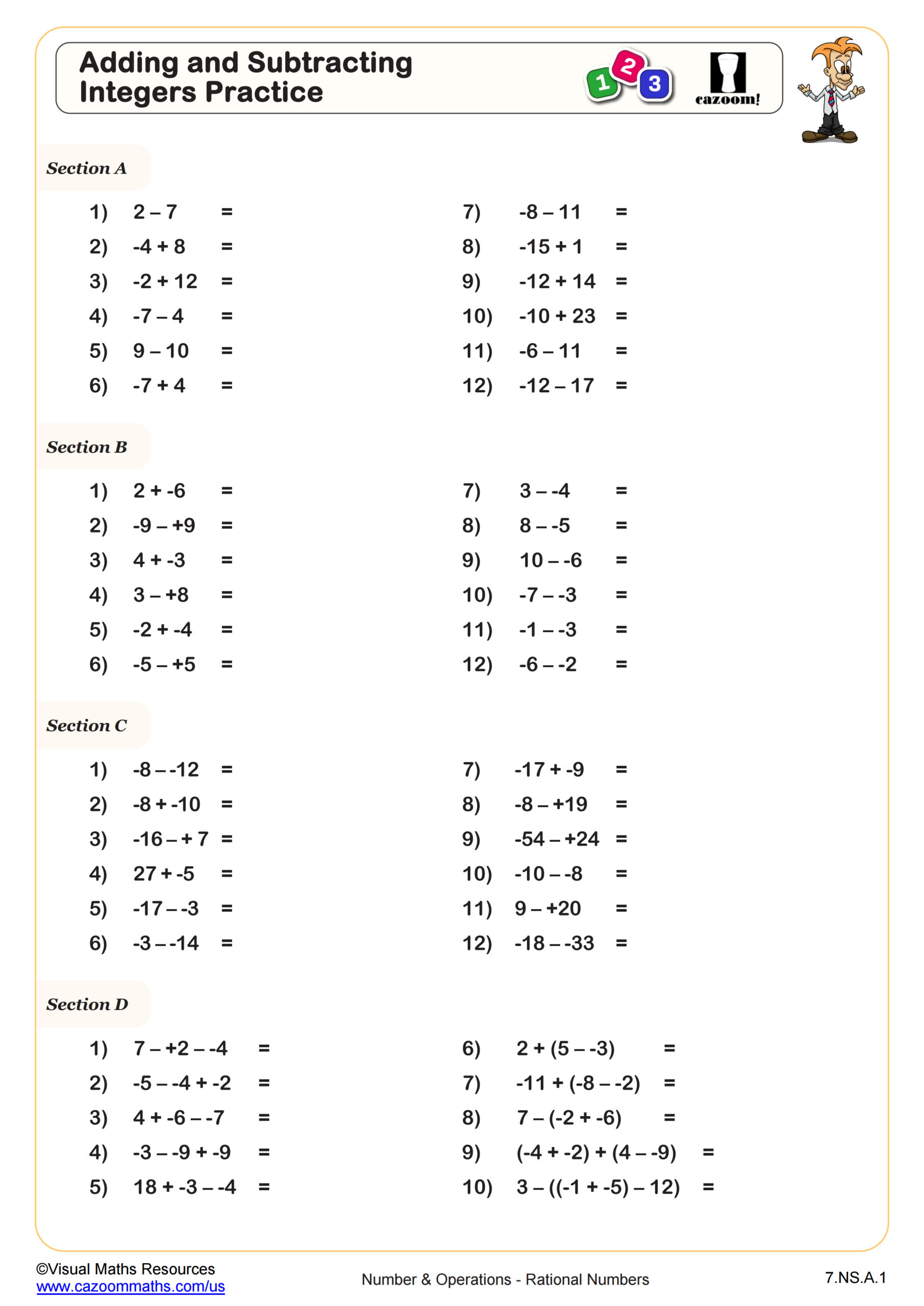
Integer subtraction is a fundamental math skill that students need to master before moving on to more complex algebraic concepts. At this level, students are expected to handle both positive and negative integers confidently. The worksheets are designed to provide a structured way for eighth graders to practice this skill, ensuring they understand how to subtract integers correctly, whether they’re working with simple problems or more challenging scenarios.
The worksheets typically include a variety of problems, from straightforward calculations to word problems that require students to apply their understanding in real-world contexts. This variety helps keep students engaged and allows for differentiated instruction, catering to different learning styles and abilities.
Layout and Structure of the Worksheets
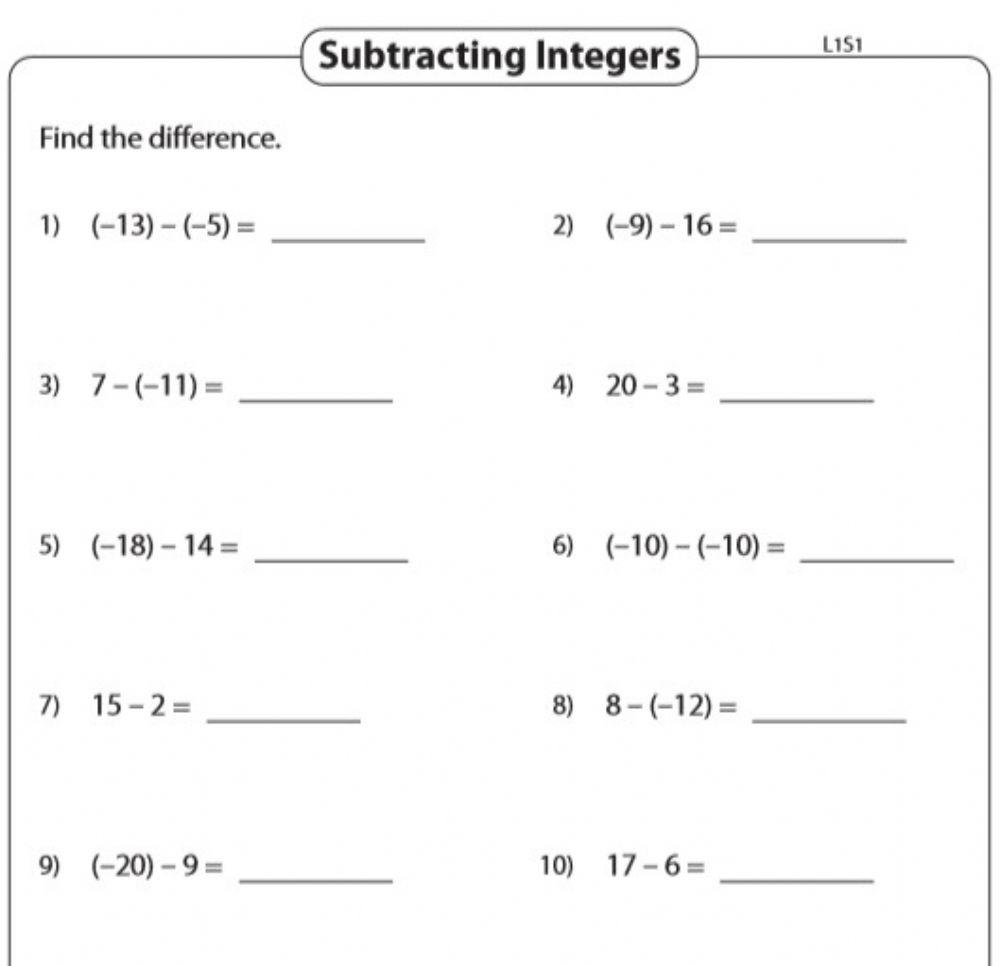
The layout of the Eighth Grade Integer Subtraction Practice Review Worksheets is thoughtfully designed to facilitate learning. Each worksheet usually consists of the following sections:
- Introduction: A brief overview of integer subtraction that includes key concepts and rules.
- Practice Problems: A mix of numerical problems that include both single-step and multi-step subtraction.
- Word Problems: Real-life scenarios where students can apply their skills.
- Reflection Section: A space for students to write what they learned or any questions they still have.
This organized structure not only helps students focus on their work but also allows teachers to easily assess their understanding by reviewing completed worksheets.
Practical Use in the Classroom
When integrating these worksheets into your lesson plans, consider the following tips:
- Warm-Up Activity: Start the class with a few problems on the board before handing out the worksheets. This will activate prior knowledge and prepare students for the practice ahead.
- Group Work: Pair students and have them work together on the worksheets. This encourages collaboration and allows students to discuss different approaches to solving problems.
- Individual Practice: After group work, let students complete the worksheets independently. This helps reinforce their learning and allows you to identify who may need additional support.
- Homework: Consider assigning these worksheets as homework to provide students with extra practice. This also allows parents to engage in their child’s learning process.
Pacing and Timing
For eighth graders, pacing is crucial when working through integer subtraction problems. Depending on the complexity of the worksheet, allow students ample time to complete it without feeling rushed. A typical session might look like this:
- 15 minutes for a warm-up.
- 30-40 minutes for group work.
- 20-30 minutes for independent practice.
- 10-15 minutes for reflection and review.
Adjust the timing based on your students’ needs and the specific challenges they face.
Available Formats and Download Options
These worksheets are often available in multiple formats, making them accessible for various classroom settings. Common formats include:
- PDF: Ideal for printing, ensuring that the layout remains consistent across different devices. PDF allows for easy distribution and quick access.
- Editable Versions: Some resources might offer editable formats, which can be useful for tailoring the worksheets to meet specific classroom needs.
When printing, consider using heavier paper or cardstock, especially if you plan to laminate the worksheets for repeated use. This durability can withstand multiple students working through the problems and allows for easy wipe-off with dry-erase markers.