Seventh Grade Unit Rate Calculations Review Worksheets
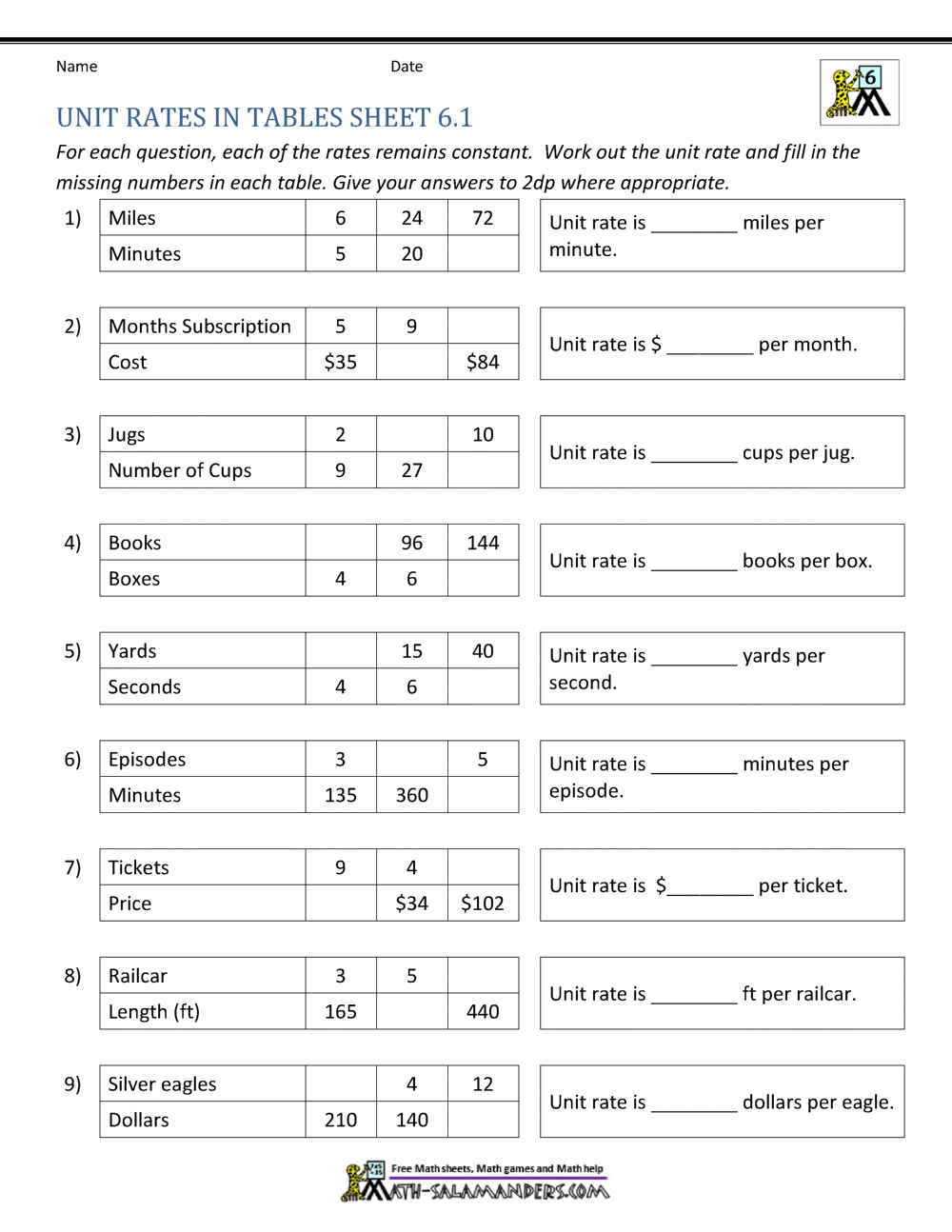
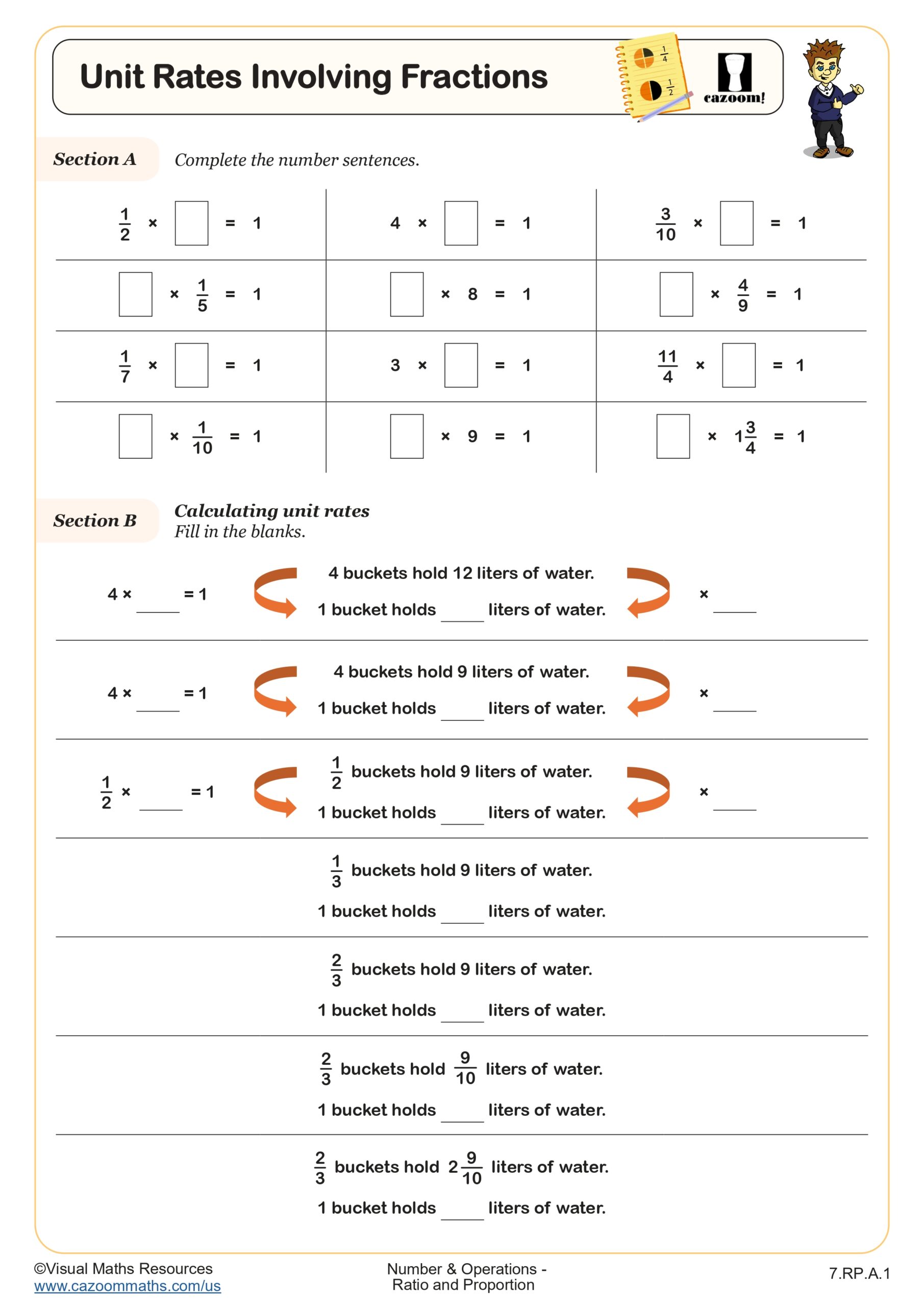
Unit rates are an essential part of seventh-grade math, helping students understand ratios and proportions in real-world contexts. The Seventh Grade Unit Rate Calculations Review Worksheets provide an excellent opportunity for students to practice and reinforce their understanding of these concepts. These worksheets focus on calculating unit rates, which is crucial for students as they encounter various mathematical and practical situations.
Understanding Unit Rates
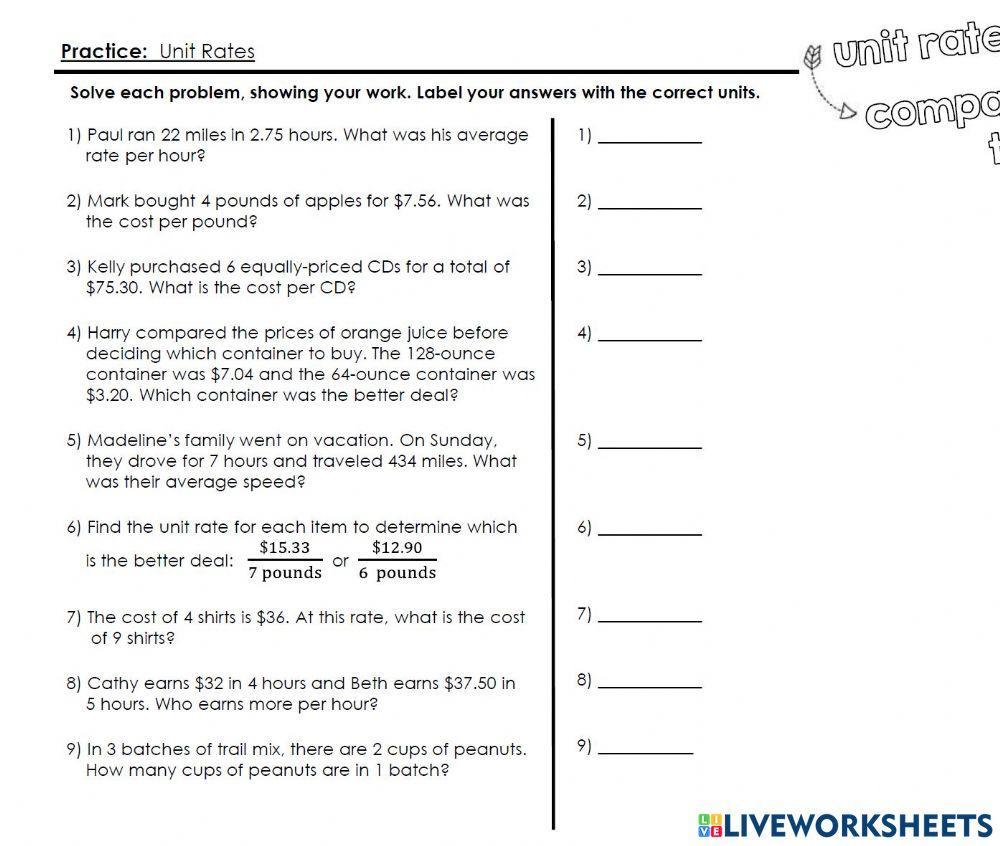
Before diving into the worksheets, it’s important to clarify what a unit rate is. A unit rate compares two different quantities, where one of the quantities is expressed as one unit. For example, if a car travels 150 miles in 3 hours, the unit rate is 50 miles per hour (150 miles ÷ 3 hours). Understanding this concept helps students make sense of situations involving speed, pricing, and other comparisons.
In seventh grade, students are expected to master unit rate calculations. They should be able to apply unit rates to solve problems, interpret ratios, and analyze proportional relationships. The worksheets are designed to facilitate this learning process.
Choosing the Right Worksheets
When selecting the right Seventh Grade Unit Rate Calculations Review Worksheets, consider the following:
- Content Relevance: Ensure the worksheets cover various scenarios involving unit rates, including real-world applications like speed, cost per item, and density.
- Difficulty Level: Look for worksheets that align with your students’ skill levels. Some worksheets may offer basic practice, while others include word problems that challenge students to apply their knowledge.
- Format: Choose worksheets that are easy to print and distribute. PDFs are often the best format for this purpose, as they maintain formatting across different devices.
Downloading and Printing the Worksheets
Once you’ve identified the right worksheets, the next step is to download and print them. Here’s how to do it effectively:
- Download the PDF: Click on the download link for the Seventh Grade Unit Rate Calculations Review Worksheets. Ensure your device has a PDF reader installed.
- Check Printer Settings: For best results, set your printer to portrait mode. If using cardstock, adjust the printer settings to accommodate thicker paper.
- Print a Test Page: Before printing multiple copies, print a test page to check for clarity and layout. This helps avoid wasting resources on poorly formatted pages.
- Make Copies: After confirming the print quality, make enough copies for your class or students.
Organizing a Unit Rate Lesson
After you’ve printed the worksheets, the next step is to integrate them into your lesson plan. Here’s a simple structure to follow:
- Introduction to Unit Rates: Start with a brief review of what unit rates are and why they are important. Use relatable examples, like comparing prices of different brands or calculating travel speeds.
- Guided Practice: Work through a few examples as a class. Show how to set up the problems and calculate the unit rates step by step. This helps students feel more confident when they tackle the worksheets independently.
- Independent Practice: Hand out the Seventh Grade Unit Rate Calculations Review Worksheets. Allow students time to work on them individually. Circulate the room to offer assistance as needed.
- Discussion and Reflection: After completing the worksheets, gather the class to discuss the answers. Encourage students to explain their thought processes and share any challenges they encountered.
Incorporating Real-World Applications
To make the learning experience more engaging, incorporate real-world applications of unit rates. Here are a few ideas:
- Shopping Scenarios: Present students with different items on sale, and ask them to calculate the best deal based on price per unit.
- Travel Problems: Use examples that involve distance and time, such as how long it would take to travel a certain distance at various speeds.
- Sports Statistics: Analyze player statistics, like points scored per game or yards gained per carry, to reinforce the concept of unit rates in a fun context.
By integrating these applications, students can see the relevance of unit rates beyond the classroom.
Assessing Student Understanding
To gauge student understanding after completing the worksheets, consider these assessment strategies:
- Worksheet Review: Go through the worksheets as a class, asking students to explain their reasoning for each answer.
- Exit Tickets: At the end of the lesson, have students write down one thing they learned about unit rates and one question they still have.
- Quizzes: Create a short quiz that includes a mix of calculation problems and real-world scenarios, allowing you to assess their grasp of the concept.
Final Tips for Success
As you prepare to use the Seventh Grade Unit Rate Calculations Review Worksheets, here are a few final tips:
- Reinforce Vocabulary: Ensure students understand key terms like “ratio,” “proportion,” and “unit rate.” This vocabulary will help them engage more effectively with the material.
- Encourage Collaboration: Pair students for the worksheet activity. Collaborative learning allows them to discuss their strategies and learn from each other.
- Provide Feedback: After reviewing the worksheets, give constructive feedback. Highlight correct answers and explain any mistakes, reinforcing learning opportunities.
By following these steps, you can effectively utilize the Seventh Grade Unit Rate Calculations Review Worksheets to enhance your students’ mathematical skills. The clarity and structure of these resources support both teachers and students, making learning about unit rates an engaging and valuable experience.