Printable Second Grade Classroom Interjection Identification Activities
Understanding interjections is a fun and impactful part of language learning for second graders. These activities are tailored to help students identify interjections within sentences, enhancing their grammar skills and overall language comprehension. The Printable Second Grade Classroom Interjection Identification Activities are designed to be both educational and engaging, allowing for a hands-on approach to learning.
Importance of Interjections in Language Learning
Interjections add emotion and expression to our speech and writing. Teaching second graders about interjections is crucial as it helps them understand how these words can enhance communication. Activities focused on interjection identification can develop students’ reading comprehension and writing skills, allowing them to express themselves more vividly. By introducing interjections early, you prepare students for more complex grammatical structures in the future.
Overview of the Printable Activities
The Printable Second Grade Classroom Interjection Identification Activities consist of various worksheets that cater to different learning styles. Each printable is designed to focus on identification, usage, and context of interjections. You can expect:
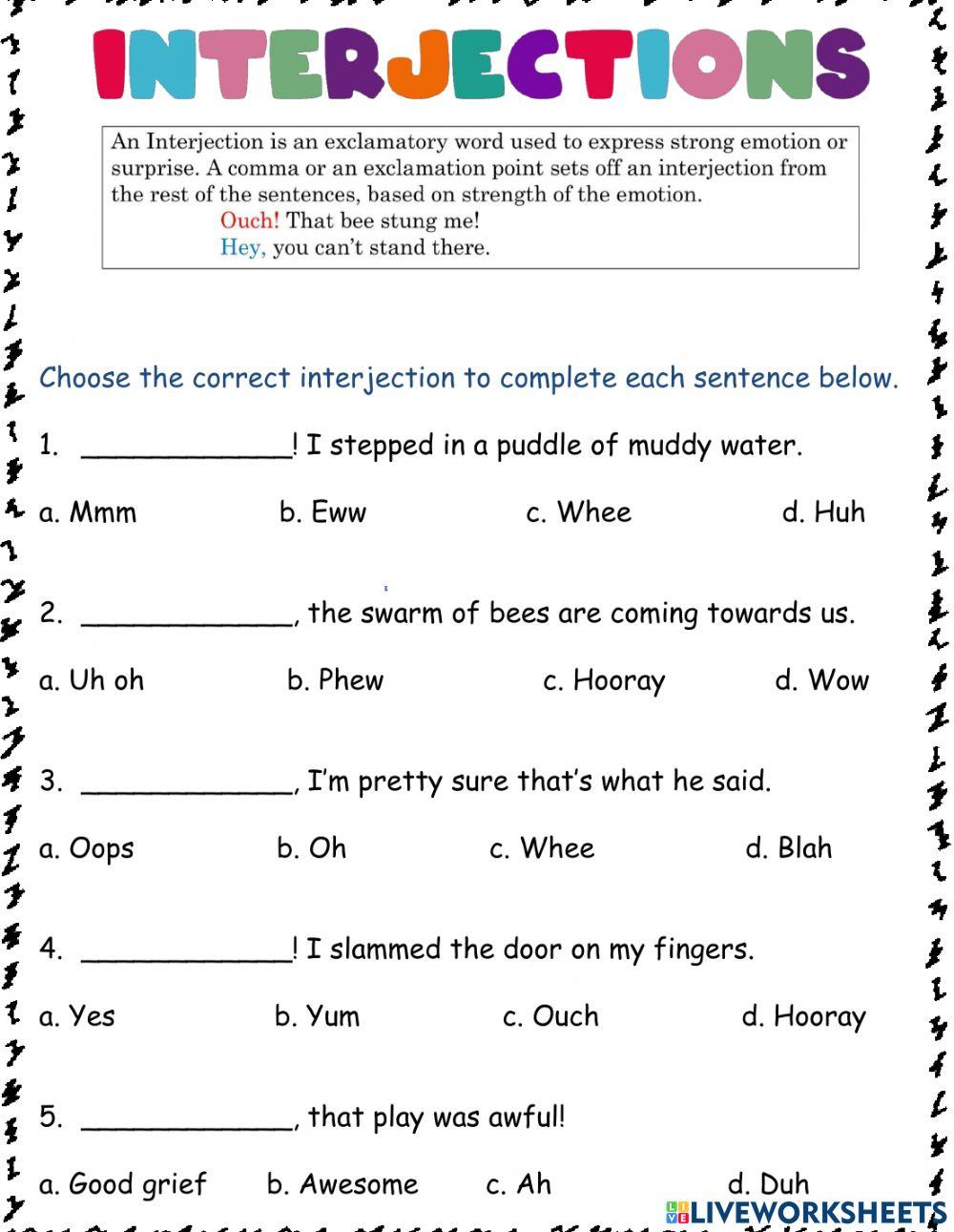
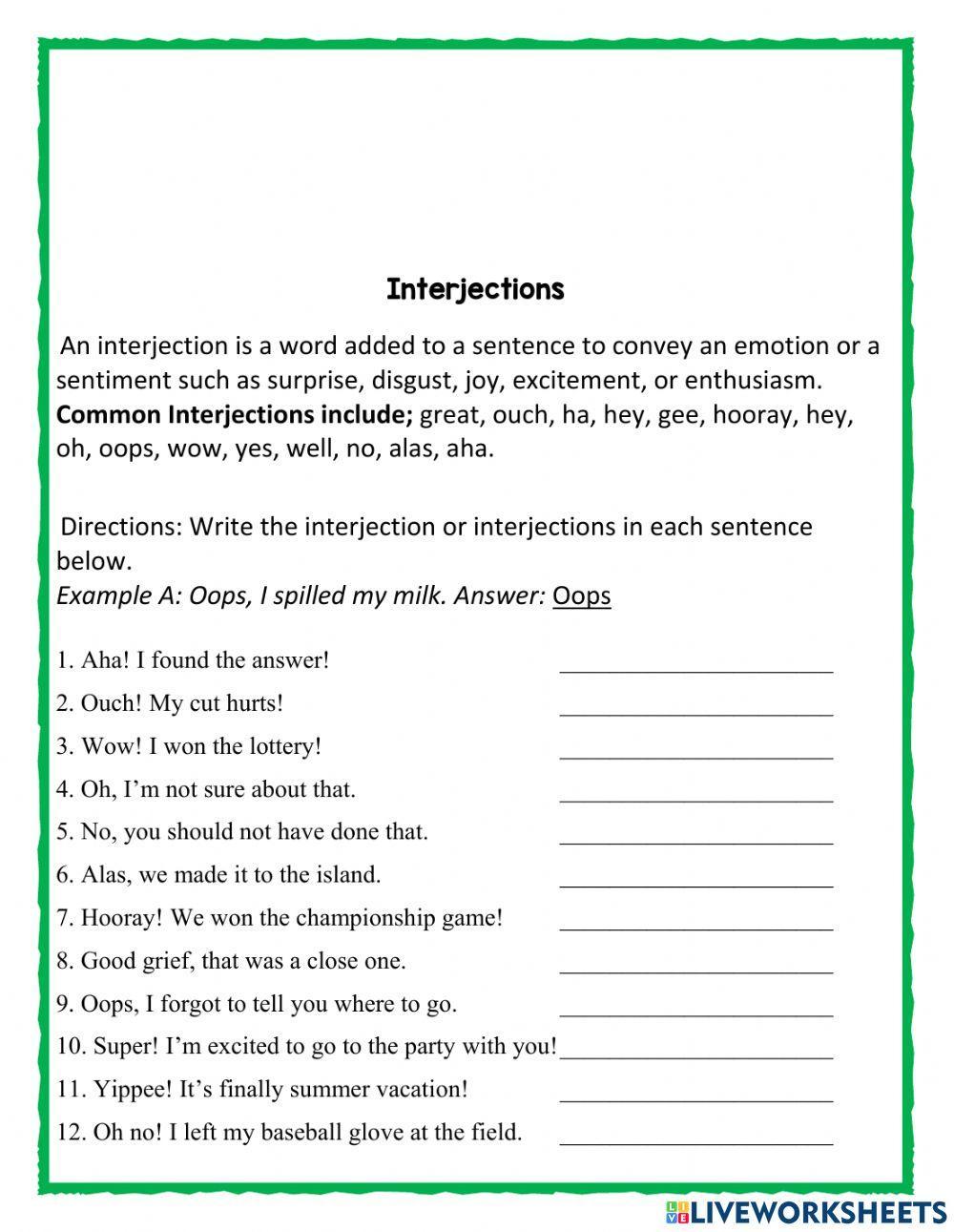
- Worksheets for identification: Simple sentences with interjections highlighted for students to identify and underline.
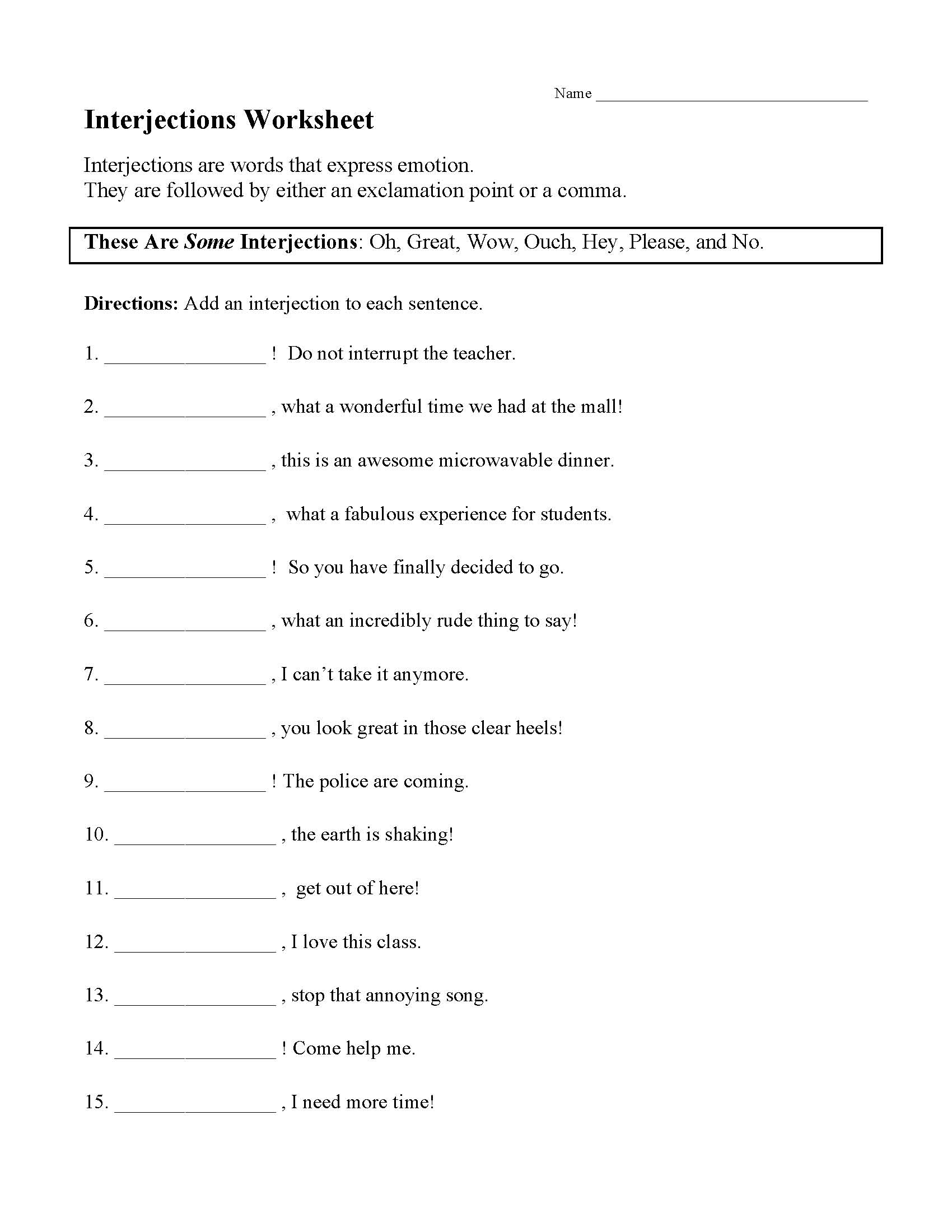
- Fill-in-the-blank activities: Sentences where students must insert appropriate interjections based on context.
- Creative writing prompts: Encouraging students to write their own sentences using interjections, fostering creativity and application of their knowledge.
These activities can be printed in standard letter size (8.5 x 11 inches), making them easy to handle and distribute in a classroom setting.
Structuring Your Lesson Plan
When incorporating these activities into your curriculum, consider spacing them out over the week. This approach allows for repeated practice, solidifying understanding over time. Here’s a suggested weekly structure:
- Day 1: Introduction to interjections using a worksheet for identification. Discuss examples and their meanings.
- Day 2: Fill-in-the-blank activity to reinforce the identification of interjections in context.
- Day 3: Group activity where students share sentences with interjections, fostering peer interaction.
- Day 4: Creative writing prompt for students to create their own sentences or short stories featuring interjections.
- Day 5: Review session where students can share their work and discuss what they learned about interjections.
This structured approach not only reinforces learning but also keeps students engaged and excited about the topic.
Design Elements of the Worksheets
Each worksheet in the Printable Second Grade Classroom Interjection Identification Activities has been designed with several key features in mind:
- Clear headings and instructions: Each page includes straightforward instructions to help guide students through the activity without confusion.
- Visual aids: Illustrations or colorful designs can be included to make the worksheets more appealing, especially for younger learners.
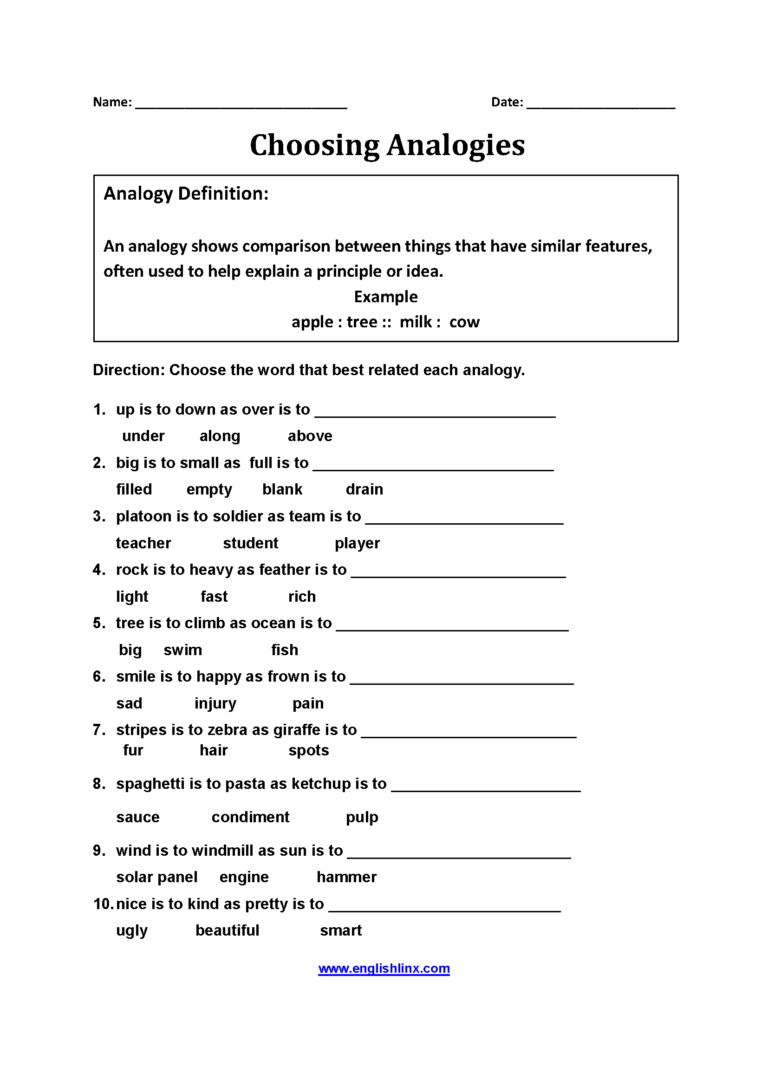
- Varied formats: Worksheets include a mix of text-based and visual formats, catering to different learning preferences. Some worksheets might feature cartoon characters expressing different emotions, helping students connect interjections with feelings.
When printing, consider using high-quality paper or cardstock for durability, especially if the worksheets will be used in a collaborative classroom setting.
Utilizing the Worksheets at Home
These activities are not just for the classroom; they can also be valuable resources for homeschooling families. Parents can print these worksheets to supplement their child’s learning at home. Here are a few tips for using the worksheets effectively at home:
- Set a comfortable workspace: Create a designated area for your child to focus on their activities, free from distractions.
- Incorporate daily practice: Just like in a classroom, encourage daily short sessions to maintain engagement and reinforce learning.
- Discuss and review: After completing a worksheet, take time to discuss the answers together. This will deepen understanding and encourage critical thinking.
By integrating these activities into daily routines, you can help reinforce your child’s grasp of interjections in a supportive and engaging manner.
Assessment and Feedback
To gauge understanding and retention, it’s essential to assess students’ grasp of interjections after completing the activities. You can use:
- Quick quizzes: Create short quizzes that ask students to identify interjections within different sentences.
- Peer reviews: Allow students to exchange their creative writing pieces and provide feedback on the use of interjections.
- Class discussions: Host discussions where students can share what they’ve learned, fostering a collaborative learning environment.
Providing constructive feedback will help students feel more confident in their skills and encourage them to continue exploring language.